
Tennis
Davis Cup: Korea end India’s historic bid with 3-1 win after Nagal falters
India’s Davis Cup comeback ended in Seoul as Korea beat them 3-1 after a doubles revival, with Soonwoo Kwon defeating Sumit Nagal in the decider.
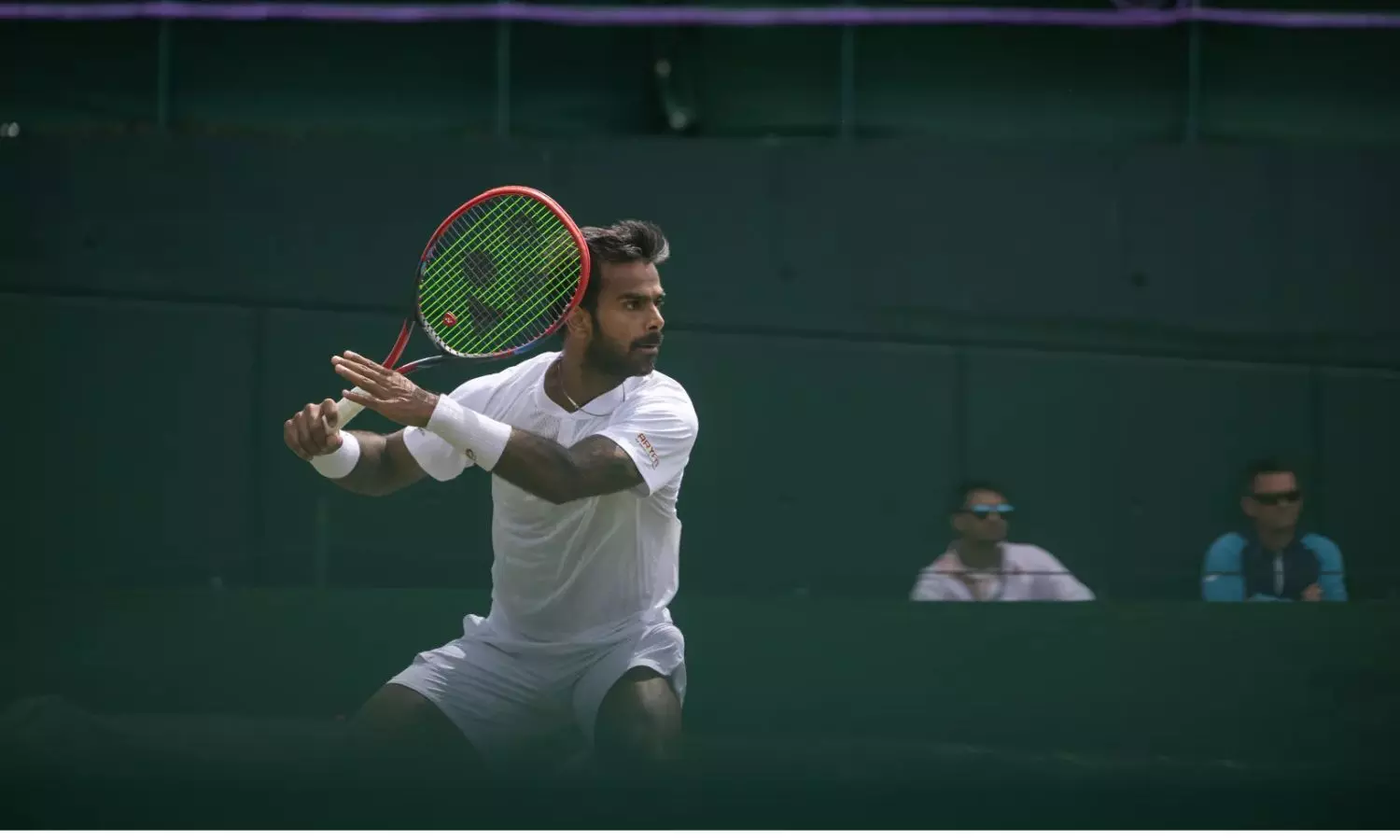
Sumit Nagal to compete at the 2026 Delhi Open. (Photo credit: Indian Tennis Daily)
India missed a historic opportunity to become the first Asian nation to reach the Davis Cup Final 8 under the new format as a listless Sumit Nagal succumbed to Soonwoo Kwon in the reverse singles, handing Korea a 3-1 victory in the Qualifier Round 2 tie here on Saturday.
After Dhakshineswar Suresh and N Sriram Balaji had revived India's hopes with a fighting doubles victory to cut the deficit to 1-2, Nagal needed to produce his best in the must-win rubber but instead endured a forgettable outing in the difficult heat, losing 1-6 2-6 to Korea number one Soonwoo Kwon.
Kwon was all over the Indian from the outset, dictating the exchanges and making Nagal look a pale shadow of the fighter who had pushed Hyeon Chung to a three-hour battle on the opening day. The Korean raced through the opening set 6-1, with Nagal struggling to find either his rhythm or intensity.
The Indian was unable to mount the kind of fightback that is his hallmark even as he tried hard in the second set.
Korea's victory also made them the first Asian team to qualify for the Davis Cup knockout stage since the competition's format was revamped, completing a historic breakthrough for Korean tennis.
For India, it was a bitter end to what had been a promising campaign. Having beaten the Netherlands earlier this year, the Indians had arrived in Seoul with a genuine chance of breaking new ground, only to fall short after losing both opening singles and then failing to complete the comeback despite the doubles rescue act.
India will now return to the Qualifier Round 1 in 2027.
The tie could also mark the final Davis Cup appearance of captain Rohit Rajpal, whose contract runs until December 2026. An extension has not yet been announced and his continuation at the helm remains uncertain.
Earlier, India needed something different after falling 0-2 behind and they turned to Dhakshineswar, replacing Niki Poonacha with the player they believed had the level and temperament to produce a result in the most difficult circumstances.
It was a calculated gamble and one that eventually worked as they won 6-3 3-6 6-3.
The opening set offered an immediate indication of India's intent. Rather than allowing the Koreans to settle, the Indians repeatedly attacked Nam's serve, with both players stepping in to hammer returns and winners.
They created four break opportunities in one game before finally making the pressure tell. Balaji produced a fierce return to create the first chance, Dhakshineswar came up with a winner for the second and then forced another opportunity with his forehand return.
The Koreans survived through some impressive net play, but the pressure was relentless. Eventually, Balaji found a volley winner that finally broke their resistance.
From there, India played with the confidence of a team that had nothing to lose.
Balaji was particularly assured, holding his serve comfortably and giving the Koreans very little to attack. Dhakshineswar was equally composed, while their returning continued to keep Nam under pressure.
Another assault on Nam's serve late in the set produced set-point opportunities, but Park stood firm. India, though, had already done enough damage and Balaji closed out the set without losing more than two points on his serve.
The Koreans responded differently in the second set.
The frantic exchanges of the opening set gave way to a much tighter contest, with both pairs protecting their serves and refusing to give away cheap points. Park and Dhakshineswar, in particular, were rock solid behind their deliveries.
But the match turned on one difficult service game for Balaji.
A Nam winner put the Indian under pressure and a wide forehand return from Balaji left the Koreans with two break chances. India saved the first, but a double fault on the second handed Korea the opening they had been waiting for.
For the first time, the Koreans had control.
Nam consolidated the break and Dhakshineswar did his part to keep India in the set, but Park held firm when it mattered and Korea levelled the match.
At 1-1, the contest was effectively reset.
The third set had a different feel altogether. Every point carried the weight of the tie. There were longer exchanges, fewer free points and almost no room for a lapse in concentration.
Even the strongest servers were being dragged into uncomfortable service games.
Dhakshineswar had to fight hard to hold, while Park also found himself under pressure. In the sixth game, Dhakshineswar produced a fine volley winner to take Park to deuce, but the Korean responded with quality serving to escape.
India kept pushing. And when the breakthrough finally came, it was decisive.
Nam's serve, which had been repeatedly targeted from the opening set, finally cracked under the pressure. India broke him to love in the eighth game, with Dhakshineswar producing the winner that gave Balaji the chance to serve for the match.
The Koreans were not finished. Balaji found himself at 30-30, with the possibility of the match slipping away still very real.
Then came the moment that summed up India's performance.
Dhakshineswar moved in and put away an easy winner to bring up match point. On the next point, with both Koreans charging towards the net, he delivered again, finding a winner that flew beyond their reach.
(Except for the headline, this story has not been edited by The Bridge Desk. It is published from a syndicated feed)