
Tennis
Tennis: With improved defence, shot selection, Vaishnavi Adkar aims for consistency
Vaishnavi Adkar has climbed nearly 400 places in the world rankings over the past 12 months.
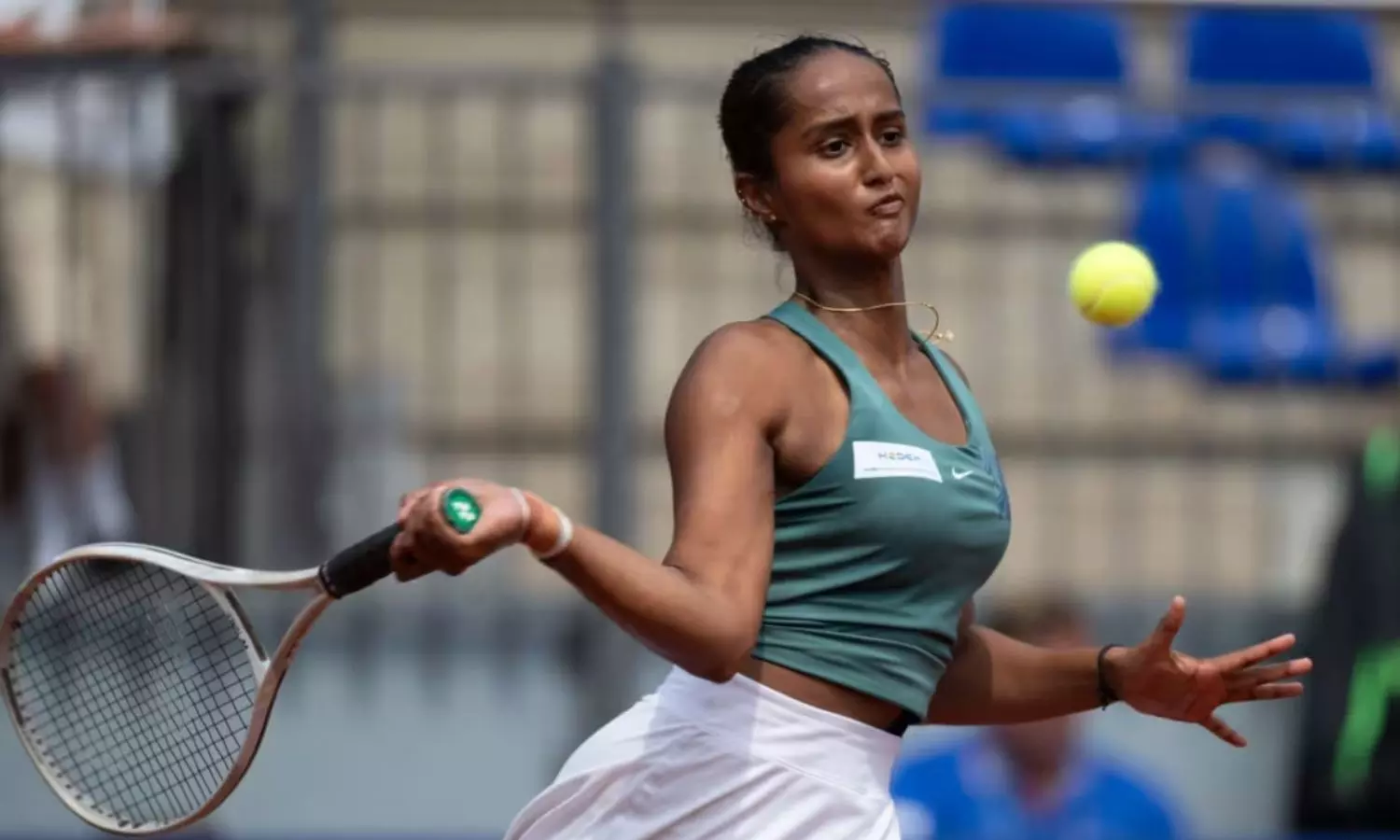
Vaishnavi Adkar. (Photo credit: Rhine-Ruhr 2025)
The potential is evident: She climbed nearly 400 places in the world rankings over the past 12 months.
The road ahead is about realising it.
India's top-ranked woman tennis player Vaishnavi Adkar has the firepower to trouble some of the best in the business, but to consistently compete at the higher level, she must become stronger, fitter and learn to fight longer for every point, according to her coaching team.
She now needs to translate her powerful shot-making and improving tactical game into the physical strength, consistency and endurance required to compete at the next level.
Her coach M Balachandran wants her to build greater physical strength, particularly in her legs, and improve her speed and endurance.
Former Argentina Fed Cup coach Maria Gaidano, who has joined the coaching set-up, has a more specific message: be prepared to play eight balls in every point, sustain that intensity over three sets and repeat the effort for five consecutive days.
That is the difference between having the shots to beat quality opponents and possessing the physical and mental wherewithal to win tournaments regularly.
Adkar has made significant strides over the past 12 months, climbing nearly 400 places in the world rankings to reach the 340s and establish herself as India's number one.
But as the 21-year-old prepares for the 2027 season, the challenge is to convert that breakthrough into sustained progress, with a top-250 ranking the immediate target and the top 100 a long-term ambition.
Adkar's rise has not come through a complete overhaul of her game but a series of adjustments aimed at making her more effective at the professional level.
"Her shot selection has improved, her defence has improved, her tactical application has improved, serve has improved, return has improved. Everything," Balachandran said.
One significant change has been her ability to vary the pace and spin rather than attempting to hit every ball with the same intensity.
Adkar has good timing and can strike both forehand and backhand with considerable pace, but Balachandran believes she needed more tools to survive difficult situations.
"She is now learning to defend with height, spin and changes of speed, stay in rallies and wait for the right opportunity before unleashing her attacking shots," he said.
Maria, who has worked with Adkar over recent weeks and travelled with her for tournaments in Tunisia, is particularly impressed by her forehand, which combines pace with heavy topspin.
But she believes the Indian needs to understand that winning points at this level requires patience.
"At this level you have to play eight balls every point, not two," said Maria, explaining the message she has been reinforcing during practice.
"Adkar sometimes looks to finish points too early, but against better opponents she must be prepared to construct rallies, vary her shots and accept that not every opportunity calls for an outright winner.
"Learning to operate in the grey area between defence and attack will be crucial," said Maria.
Both coaches identify physical conditioning as the biggest priority during the pre-season.
Balachandran believes she can compete with almost anybody for a set, but the challenge is sustaining that level through the second and third sets and across an entire tournament.
The physical upgrade, however, must be carefully managed.
Balachandran has a word of caution when it comes to sudden increase in training loads simply because her ranking has improved. He warned that overtraining could lead to injuries.
The pre-season will therefore focus on finding the right balance between on-court work, strength and conditioning, nutrition and recovery.
The team now has a clearer understanding of her requirements, but must also identify what works best for her body, including the appropriate training intensity, diet and recovery routine.
There has also been progress in her mental approach. Following the big results in Bengaluru, where she made the final early this season, expectations rose but travelling in Europe and experiencing losses have helped her understand that consistency comes from concentrating on each match rather than chasing the previous week's result or worrying about rankings.
Balachandran says the philosophy is to concentrate on becoming a better player, with rankings expected to follow.
Maria, meanwhile, describes Adkar as a quick learner who is gradually becoming more communicative.
"Though reserved by nature, she has started asking questions about shot selection, tactics and how to approach particular situations," said Maria.
Maria's approach is to listen first and then offer inputs, allowing the player to become comfortable with the relationship.
Having women in the support team also brings an additional dimension.
Maria offers an understanding of patterns specific to women's tennis, including the use of spin, angles, the middle of the court and the lob as a defensive option.
Becoming India's number one, Adkar admitted, happened sooner than she expected.
Maria believes Adkar has the potential to reach the top 100, while Balachandran also sees that as a realistic long-term destination, provided her physical development matches her tennis ability.
The immediate target, however, is a move towards the top 250, something the coaches believe could happen in the first part of 2027.
For Adkar, the next season will be about turning the lessons of the past 12 months into consistent performances.
(Except for the headline, this story has not been edited by The Bridge Desk. It is published from a syndicated feed.)