
Tennis
Legal Notice demands DLTA's eviction over land violations
A legal notice accuses the Delhi Lawn Tennis Association (DLTA) and the All Indian Tennis Association (AITA) of illegal land use, demanding swift government action.
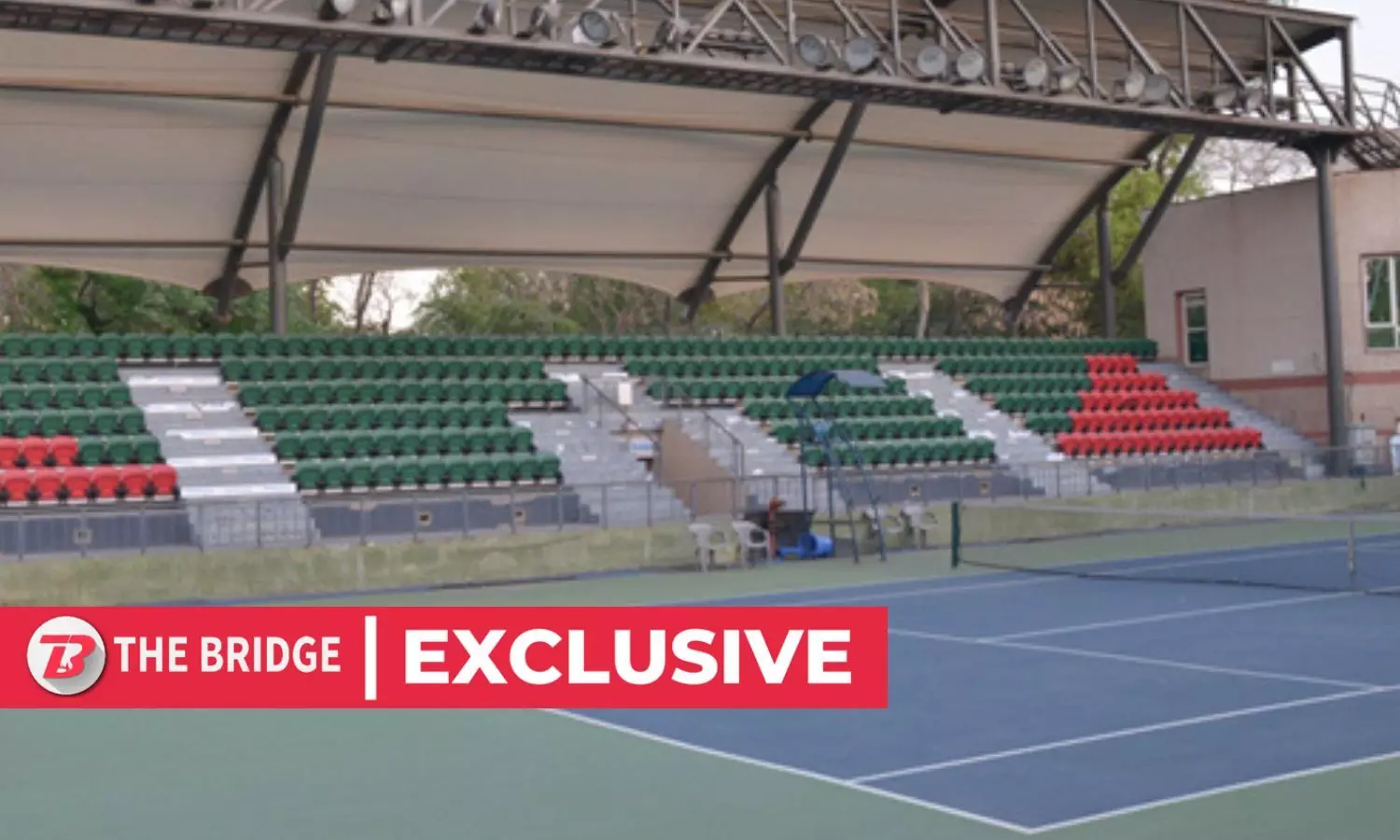
The DLTA was allotted the land by the L&DO on a ‘temporary lease’ initially for a period of ten years back in 1981. (Photo credit: DLTA)
Indian tennis has been caught up in a player vs administrator battle for some time now. And now, a legal notice accuses the Delhi Law Tennis Association (DLTA) and the All Indian Tennis Association (AITA) of illegal land use, demanding swift government action.
An investigation into the DLTA's seven-acre property in South Delhi’s prime location has brought to light a paper trail that has remained buried for decades.
Documents accessed by The Bridge show that between 1997 and 2000, the Land & Development Office (L&DO), under the Ministry of Housing and Urban Affairs, repeatedly flagged the DLTA for alleged lease violations including unauthorized construction, failure to submit sanctioned building plans and misuse of the leased premises.
The DLTA was allotted the land by the L&DO on a ‘temporary lease’ initially for a period of ten years back in 1981, which was later renewed for another twenty years until June 5, 2011.
But government records show the land beneath this legacy has been mired in unresolved disputes since the 1990s.
A decade of inspections and notices
In 1993, the Sports Authority of India transferred the stadiumto DLTA for Rs 24 lakh. However, the land on which the south block building existed has always remained the property of the Government of India, according to an RTI response obtained by The Bridge.
Throughout the 1990s and 2000s, the government's L&DO issued a string of show-cause notices to DLTA. The show cause notices repeatedly mention “there have been both unauthorized construction and misuses by way of renting out.”
The notices warned that the government could exercise its right to terminate the temporary lease and asked the association ‘to explain why such action should not be taken’.
Inspections in December 1996 and December 2003 found continuous unauthorised construction and space being rented out to private companies, including IOC, Godrej and Philips; inspectors noted that rooms had been "earmarked" for these firms in apparent recognition of their sponsorship.
Despite years of warnings, DLTA went on to sublet more than 56,000 square feet of the complex to outside organisations, including Punjab National Bank, the Tata Education & Development Trust, and the German Academic Exchange Service, even after the Ministry of Law ruled in 2010 that DLTA, as a sports body, was not eligible for the subletting policy it relied on.
In April 2002, AITA (which was operating from the DLTA premises) remitted on behalf of DLTA ₹7,03,748 to the L&DO, representing five percent of the rental income under the institutional subletting clause.
However, internal L&DO files from December 2003 state that accepting the payment was an administrative error and recommended that the amount be refunded, while reiterating that the DLTA had no right to sublet under the terms of its temporary lease.
L&DO sought opinion from Ministry of Law
Just two years before the lease expired, the L&DO sought the opinion of the Additional Solicitor General through the Ministry of Law on whether the DLTA could be treated as a socio-cultural institution and whether it could benefit from the government's 2008 subletting policy.
The DLTA had itself requested that the policy be extended to it.
However, the Ministry of Law concluded that the policy, meant for socio-cultural institutions, did not apply to the DLTA. Despite this, government records show that the file continued to move.
The DLTA was subsequently asked to pay misuse charges and as of June 2016, it still owed Rs 4,31,90,271 to the government. The L&DO continued monitoring payment of the outstanding dues through the approved installment schedule.
The documents also indicate that the government continued examining the matter well after the original lease expired in June 2011. The lease was subsequently renewed until 2031.
As of this report, the DLTA continues to sublet and pay the government the agreed percentage of the rental income.
A fresh legal notice
The matter has now resurfaced after Ajay Yashpaul, a professional tennis coach, served a legal notice on July 27, a copy of which is in possession of The Bridge, to the Ministry of Housing and Urban Affairs, the Ministry of Law and the Sports Ministry, with AITA and DLTA named as respondents.
The notice demands that the ministries terminate DLTA's lease, begin eviction proceedings, seal unauthorised premises, and act within 15 days, failing which it threatens a public interest litigation in the Delhi High Court. It draws a direct comparison to the Chandigarh Lawn Tennis Association, which was evicted last year on similar grounds.
“Public land meant for sports development cannot be converted into a private commercial asset,” said Prasang Raheja, counsel for the complainant, to The Bridge. Raheja was instrumental in highlighting structural voilations of lease deed in CLTA matter.
The comparison between DLTA and CLTA raises broader questions about the consistent enforcement of lease conditions governing public sports infrastructure.
It is worth noting that the July 27 notice reflects the allegations of one party and has not been tested or adjudicated by any court. DLTA, AITA, and the government ministries named in the notice have not yet issued a public response.
Unanswered questions
The documents accessed by The Bridge do not merely raise questions about alleged lease violations. They raise larger questions about how different government departments dealt with them.
Why was the tennis stadium transferred by the Sports Authority of India (SAI) to the DLTA in 1993 for ₹24 lakh while the land continued to remain with the Government of India?
Why did the L&DO continue processing requests relating to the property even after the lease expired on June 5, 2011? And why were requests for subletting considered and payment of outstanding dues allowed in installments while the matter remained under examination?
Why did the Ministry of Law conclude that the 2008 Subletting Policy for socio-cultural institutions did not apply to the DLTA and leave the issue unresolved?
And if the L&DO itself repeatedly recorded alleged unauthorized construction, misuse of the premises and other breaches over several years, why was no final decision taken for so long?
The documents do not answer those questions. They remain with the authorities who administered the lease over the years and the officials who occupied key positions in the L&DO, the Sports Authority of India, the All India Tennis Association and the Delhi Lawn Tennis Association.
AITA and DLTA officials were unavailable for a comment at the time of filing this report.
The notice arrives at a sensitive moment for Indian tennis governance more broadly.
AITA is currently operating under a court-appointed administrator Justice (retd) Gita Mittal, with the Delhi High Court having set a September 30 deadline for fresh elections under a new constitution mandated by the National Sports Governance Act.
The dispute traces back to a petition filed by former players Somdev Devvarman and Purav Raja, which accused AITA of ignoring age and tenure limits while denying athletes a democratic vote.
The International Tennis Federation has separately warned AITA it risks losing its membership if administrator-led governance continues.
DLTA denies allegations
Meanwhile, the DLTA denied the allegations saying “the news and contents are misleading and not based on facts, assumingly with vested interest”.
“DLTA wishes to clarify that there is no breach of land lease or land use conditions as all facilities created in the complex are in consonance with the stipulations laid down by the Ministry of Housing and Urban Affairs (particularly L&DO) as well as the MoU with Ministry of Youth Affairs and Sports (MYAS),” the release read.
“As no Govt funding or assistance is given for maintenance and upkeep of the complex, DLTA has been permitted to generate internal revenue for this purpose through due permissions granted by the Govt for subletting office space with each tenancy being separately sanctioned and approved by L&DO. All tenancies are with multilateral/bilateral/UN/govt organizations and there is no tenancy without the Govt’s explicit approval,” it added.
But Anil Khanna, the former president of AITA as well as the DLTA, had said in an interview that all matters related to alleged land lease violations of the DLTA Sports Complex "were settled" before he handed over charge and any remaining issues should be addressed by the present management.
"I have not been in office for 10 years. Violations may have dated back to (his and previous managements), but they were all settled by Mr. Yashwant Singh in a meeting with Mr. Jaipal Reddy (then Union Minister of Urban Development)," Khanna, 73, was quoted as saying.
Note: This report has been duly updated in keeping with DLTA's official statement on the matter on July 31, 2026.