
Table Tennis
Suspended TTFI secretary Kamlesh Mehta to challenge decision in court, alleges governance lapses
Former secretary general says lack of due process and unilateral decisions forced him to seek judicial remedy.
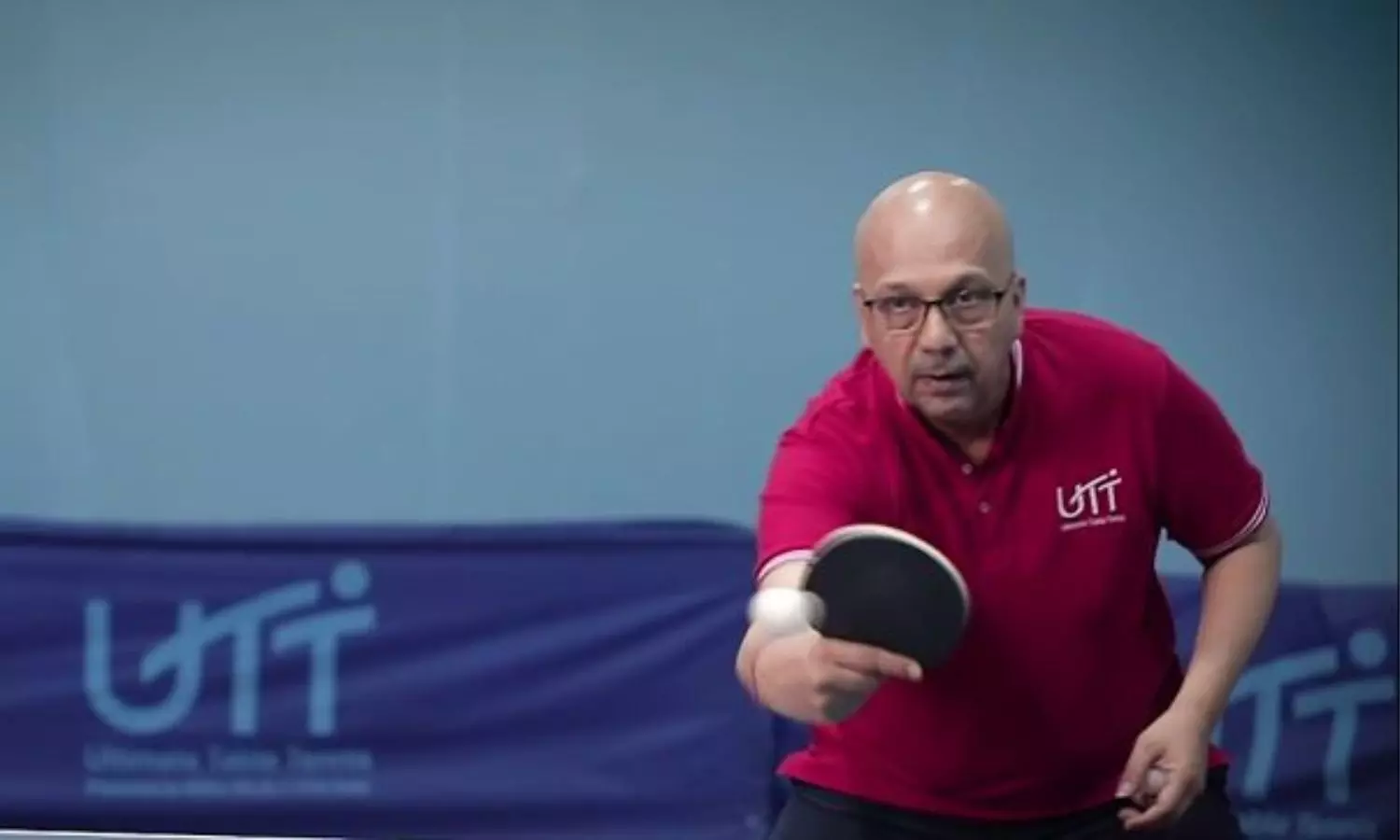
Kamlesh Mehta (Source: The Hindu)
Kamlesh Mehta, who was recently suspended as Secretary General of the Table Tennis Federation of India (TTFI), has said he will approach the court, alleging serious lapses in governance and due process by the federation’s president.
Mehta’s statement comes days after he was removed from office following a resolution passed at the TTFI Annual General Meeting (AGM) in New Delhi, where Yatin Tipnis, Secretary of the Maharashtra State Association, was declared the new Secretary General.
Responding to the developments, Mehta said approaching the court would be his “last resort”, claiming that the manner in which the action was taken left him with no effective internal remedy and raised serious concerns about fairness and institutional process.
“National sports federations function on public trust, public money and collective effort. Decisions affecting them must be taken carefully, transparently and strictly in accordance with established rules,” Mehta said, adding that failures in governance ultimately impact athletes, state associations and the credibility of the sport.
The suspension followed weeks of internal administrative turbulence within the federation, with different groups of state associations convening parallel meetings. Federation sources had earlier told The Bridge that several state units were unhappy over delays in announcing the national tournament calendar and the absence of a regular AGM.
In a letter dated January 6, TTFI president Meghna Ahlawat had called for an AGM on January 28, citing alleged inaction by Mehta. In the letter, the president stated that despite the circulation of agenda points and a formal request to the Secretary General to convene the Executive Committee and AGM, no response had been received from Mehta, and no official notice had been issued.
The letter also said that, given the need for time-bound decisions — particularly relating to the 2025–26 National Championships — the president had proceeded to convene the meeting in the interest of institutional responsibility.
Earlier this month, Mehta had convened an Emergency Special General Meeting in Mumbai, which was attended by a limited number of state associations. Federation officials later criticised the meeting, claiming that only a small group of units participated and that tournament dates and venues announced there were subsequently overturned at the New Delhi AGM.
At the AGM, attended by 20 state associations, the decisions taken at the Mumbai meeting — including the allocation of events to Gujarat and Madhya Pradesh — were cancelled, and new hosts were confirmed. A resolution was also passed to suspend Mehta with immediate effect.
In his response, Mehta alleged that since the elections held in December 2022, the functioning of TTFI had increasingly reflected a pattern of unilateral decision-making by the president.
He claimed that several commercial and administrative matters — including tender-related processes — were handled without transparency, without collective approval and without placing supporting records before the Executive Committee or the General Body.
“In multiple instances, tenders were not allotted through an open and fair process, giving rise to serious concerns of favouritism and conflict of interest,” Mehta said, adding that despite repeated requests, no documentary proof had been produced to show that due process was followed.
Mehta further alleged that decisions involving significant financial implications — including the execution of agreements and appointments — were taken unilaterally under the authority of the president, without ratification by the competent bodies of the federation.
He also claimed that there had been prolonged disengagement by the president from the federation’s day-to-day functioning.
“An absent President has chosen to suspend an active General Secretary rather than explain her own lack of engagement,” he said.
Defending his actions, Mehta said that as Secretary General, he was only discharging his responsibility to ensure compliance with rules and proper use of public funds.
“Asking that proof of due process be placed on record from the President was not insubordination, it was responsibility,” he said, adding that he was being punished not for wrongdoing but for insisting that procedures be followed.
Mehta also raised concerns about the agenda circulated for the AGM, alleging that it appeared to single out and disadvantage North-Eastern states, which, he said, undermined the inclusive and national character of the federation.
“The broader concern is that TTFI is being treated as though it were personal property, governed by whims and preferences rather than by rules and collective decision-making,” Mehta said.
He stressed that his intention to seek judicial intervention was not driven by personal grievance but by the need to restore constitutional functioning, fairness and accountability within the federation.
“This issue should not be reduced to personalities or power struggles. It is about whether people who follow rules and act in good faith will be protected or punished within our sports institutions,” he said.
TTFI’s governance has been under scrutiny in recent years. In February 2022, the Delhi High Court had suspended the federation and appointed a Committee of Administrators to run its affairs following multiple legal challenges, including a petition filed by Commonwealth Games gold medallist Manika Batra.
Mehta said he would continue to serve the sport in whatever capacity possible and warned that penalising officials who question irregularities could create a culture of fear within Indian sport.
“Today, it may be me. Tomorrow, it could be anyone else who enters the system with the intention of improving governance and working in the best interest of athletes,” he said.