
Squash
Explained: Why does Anahat Singh wear protective eyewear in squash matches?
The age matters when it comes to squash's eye-protection regulations.
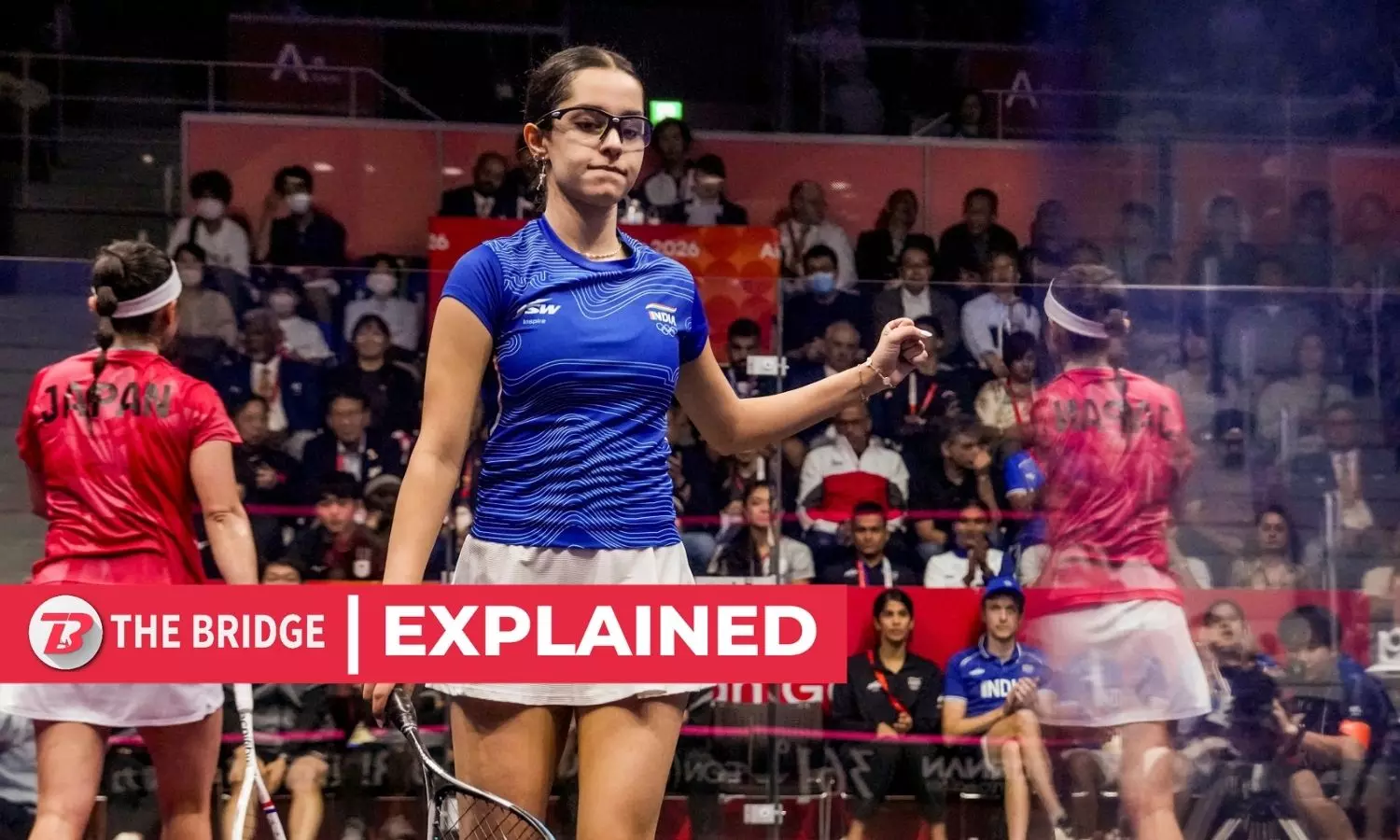
Why does Anahat Singh wear protective eyewear in squash matches? (Photo credit: PTI)
Anahat Singh clinched a silver medal at the 2026 Asian Games, but there is one detail that immediately stands out when she walks onto the squash court: the protective eyewear she wears during her matches.
The 18-year-old had reached the title clash after a stunning comeback against Japan's world No. 6 Satomi Watanabe.
Singh, born on March 13, 2008, is still under 19.
That age matters when it comes to squash's eye-protection regulations.
Is protective eyewear mandatory for Anahat?
World Squash regulations require all junior players, defined as players under 19, to wear appropriate protective eyewear during competition.
Importantly, the requirement applies even when a junior player is competing in an adult or senior age group.
That means Anahat can be playing the senior women's singles event at the Asian Games while still being required to wear protective eyewear because she is under 19.
So, while the Asian Games is a senior-level competition, Anahat's age means the junior safety regulation still applies to her.
Why is eye protection required?
Squash is played in a relatively confined space, with two players moving rapidly around the same court. Players are often positioned close to one another while the ball can travel at considerable speed.
The risk of serious injury is generally low, but the potential consequences of a ball or racket striking the eye are significant. World Squash therefore has specific standards for protective eyewear designed for racket sports.
The federation recommends that protective eyewear be worn properly over the eyes during play and places responsibility on players to ensure that the equipment they use is suitable and meets the required safety standards.
What counts as appropriate protective eyewear?
It is not simply a case of putting on any pair of sports glasses.
World Squash says appropriate protective eyewear must undergo stringent testing and meet the relevant safety standards for squash. The international standard specified by World Squash is ISO 18527-2:2021.
Other standards recognised for squash include:
- ISO 18527-2:2021 – International standard
- BS EN 18527-2:2021 – UK standard
- F3164-19 – US standard
World Squash also maintains a list of protective eyewear products that it has verified as having been tested for squash.
Does this apply to all squash players?
For singles, World Squash recommends protective eyewear for all players, but makes it mandatory for junior players under 19 during competition.
For doubles, the rule is stricter: protective eyewear meeting the appropriate safety standard must be worn by players of all ages.
The same junior requirement applies even if an under-19 player is participating in an adult competition.
There is also a distinction with Squash 57, where World Squash does not make eye protection mandatory but encourages its use, particularly among less experienced players.
Ordinary prescription spectacles are not considered suitable protective eyewear for squash.
Players who require prescription glasses are expected to use appropriate squash eye protection over their glasses or prescription protective eyewear specifically designed and approved for squash.
Anahat is a senior-level international competitor, but she is still under 19.
At 18, she falls within World Squash's junior safety classification. Therefore, the protective eyewear requirement follows her into senior competition.
Her appearance in the Asian Games final does not change that rule.
Anahat has already made history in Nagoya by becoming the first Indian woman to reach the Asian Games squash singles final. She fought back from 0-2 down against Watanabe to win 9-11, 11-13, 12-10, 11-6, 11-3 and book her place in the gold-medal match.
So when she takes the court for the final, the eyewear is more than just part of her match-day equipment: it is mandatory protective equipment because she is still an under-19 player competing at senior level.
World Squash strongly recommends protective eyewear for all players, both juniors and adults, during training, practice and other non-competitive activities.
The mandatory rule exists for junior competition, but the underlying principle is player safety. Coaches are also encouraged to prioritise eye protection during practice.