
Para Sports
Explained: What is Blind Cricket? Rules, regulations, and history
Blind cricket is a modified version of the sport for visually impaired athletes, with India among its most successful teams
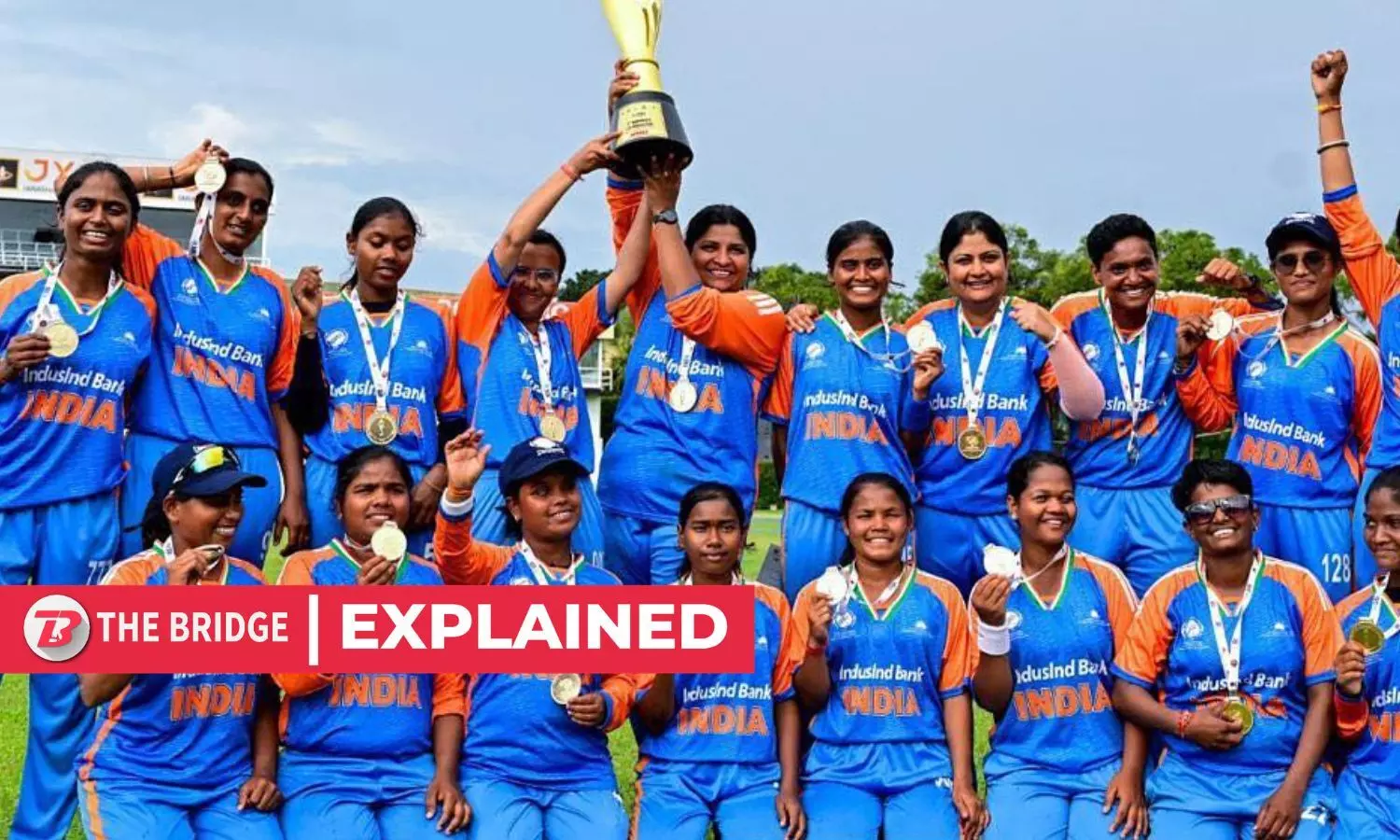
Blind cricket is a modified version of the sport designed for visually impaired athletes, featuring specialised rules, audible balls, and player classifications based on levels of vision.
The sport has recently gained renewed attention in India through social media, growing institutional support, and the continued success of the Indian blind cricket teams on the international stage.
How blind cricket is played?
Blind cricket is played using a larger hollow plastic ball filled with metal bearings, allowing players to track the ball through sound.
The game also uses painted metal stumps and underarm bowling, while bowlers are required to shout “play” while delivering the ball.
Each team consists of 11 players divided into three vision categories.
B1are totally blind players, B2 are partially sighted players who can see up to two metres and B3 are partially sighted players who can see up to six metres.
Teams must include minimum four from B1 players, three B2 players, and four B3 players.
These classifications help maintain balance and fairness during matches.
Rules that make blind cricket unique
While blind cricket follows standard cricket laws, several rules are modified for accessibility.
For B1 players each run scored counts as two runs, they can catch the ball after one bounce, they cannot be stumped out and LBW applies only on the second time.
For bowling, the ball must pitch at least twice before reaching a B1 batter. The format relies heavily on sound, communication, reflexes, and memory rather than sight.
The origins of blind cricket
Blind cricket was invented in 1922 in Melbourne, Australia, when two blind factory workers improvised the game using a tin can filled with rocks.
Soon after, the Victorian Blind Cricket Association was formed, and the first interstate match was played in 1926.
Over the years, the sport expanded globally and eventually became highly popular in South Asia, especially in India and Pakistan.
Blind cricket’s rise in India
The first Blind Cricket World Cup in the 50-over format was held in 1998.
India later hosted the inaugural Blind T20 World Cup in Bengaluru in 2012 and went on to win the tournament, marking a major turning point for the sport’s popularity in the country.
The victory brought increased media attention, corportate recognition, and wider public support, helping a larger audience reach a larger audience across India.
India’s men’s blind cricket team has since become one of the most successful teams in the world.
India's Major achievements in Blind Cricket
Men's T20 World Cup winners: 2012, 2017, 2022
Men's ODI World Cup winners: 2014, 2018
Men's T20 Asia Cup winners: 2016
The Indian women’s blind cricket team also created history by winning the inaugural Women’s Blind T20 World Cup in 2025.
Top blind cricketers in India
Several Indian players have become major names in blind cricket over the years. Among the most recognised are Shekhar Naik, Ajay Kumar Reddy, Dunna Venkateswara Rao, Rohit Kumar Sharma and Prakash Jayaramaiah.
Many of them played key roles in India’s World Cup-winning campaigns.
Training and coaching in blind cricket
Blind cricket players train differently from traditional cricketers.
Training focuses heavily on listening skills, verbal communication, reflex-based movement, distance memory and sound tracking.
Players learn to judge the speed and direction of the ball entirely through sound. Several organisations and academies have played an important role in developing blind cricket in India.
One of the biggest contributors to blind cricket in India has been the Samarthanam Trust for the Disabled, which works closely with the Cricket Association for the Blind in India (CABI). Founded by SP Nagesh and led by Mahantesh G. Kivadasannavar, the organisation has helped manage, fund, train, and promote blind cricket across the country for decades.
CABI also regularly organises coaching camps across states including Karnataka, Telangana, and Delhi.
Other initiatives include the Kerala Blind Cricket Academy in Aluva and regional associations like the Cricket Association for the Blind in Himachal Pradesh.
BCCI’s support and the future of blind cricket
A major boost for the sport came in February 2026, when the Board of Control for Cricket in India (BCCI) announced a structured support framework for blind cricket.
The move aims to provide better funding, improved player support, international exposure and access to major stadiums and facilities
The recent success of the Indian women’s team, combined with increasing social media visibility, has also helped bring the sport into mainstream discussion.
Prime Minister Narendra Modi has met both the men’s and women’s blind cricket teams following their World Cup victories in 2014 and 2025 respectively, further increasing recognition for the sport.
With growing institutional support and public attention, blind cricket in India appears set for a stronger and more professional future.