
Olympics
India and Italy sign MoU to deepen cooperation in training, sports science
The agreement enables mutual access to elite training centres and expands athlete and coaching exchanges.
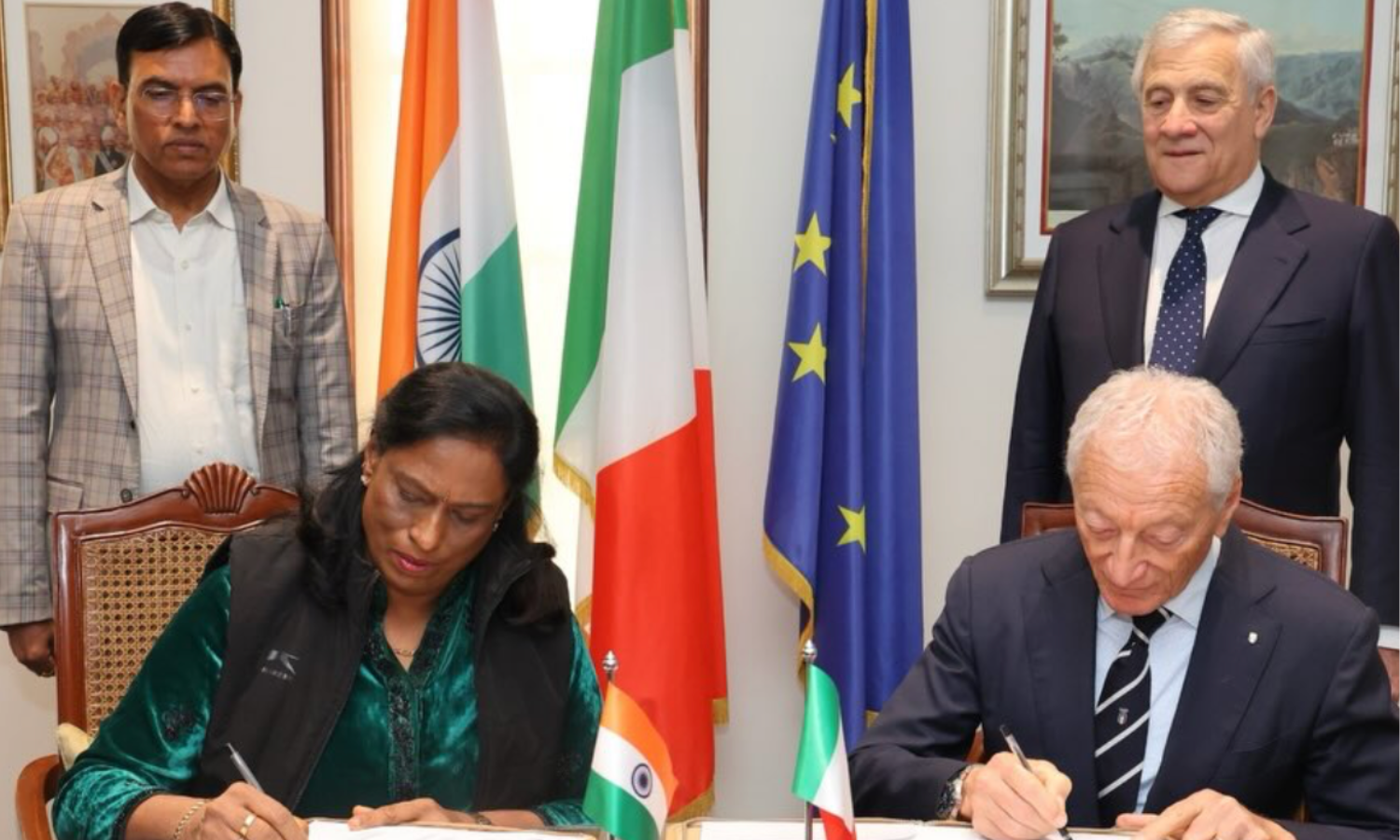
India and Italy sign MoU to deepen cooperation in training, sports science and infrastructure (Photo credit: IOA)
The Indian Olympic Association (IOA) and the Italian National Olympic Committee (CONI) on Wednesday formalised a new cooperation framework aimed at expanding bilateral ties in athlete development, coaching and sports science.
The Memorandum of Understanding was signed in New Delhi by IOA President PT Usha and CONI chief Luciano Buonfiglio in the presence of Italy’s Deputy Prime Minister Antonio Tajani and India’s Sports Minister Mansukh Mandaviya.
According to the IOA, the agreement creates a structured platform for the joint promotion of sports, knowledge exchange and reciprocal access to high-performance centres in both countries. Athletes, coaches and sports science professionals from India and Italy will be able to utilise elite training environments and participate in shared development programmes.
PT Usha said the partnership marks an important step in India’s efforts to enhance international collaboration in sport. She noted that expanded access to technical expertise and advanced training systems would support India’s long-term performance goals.
Mandaviya described the MoU as timely, emphasising that collaborations with established sporting systems could bolster preparations for upcoming Olympic cycles. He added that the government remains committed to initiatives that strengthen India’s global sporting competitiveness.
Buonfiglio said Italy welcomed the opportunity to work closely with India, highlighting the two nations’ shared sporting culture. He said the agreement would facilitate exchanges in coaching, sports science and emerging talent development, creating “a bridge of excellence” for future cooperation.
The MoU outlines plans for joint training camps, collaborative research projects and pathways for young athletes. Both committees expect the partnership to contribute to long-term capacity building and deeper institutional ties between the two Olympic bodies.