
Hockey
Hockey legend Harbinder Singh reminisces 1966 Asian Games gold win
The song "Watan ki raah mein watan ke naujawan shaheed ho" and the final remain etched in the memory of Harbinder Singh.
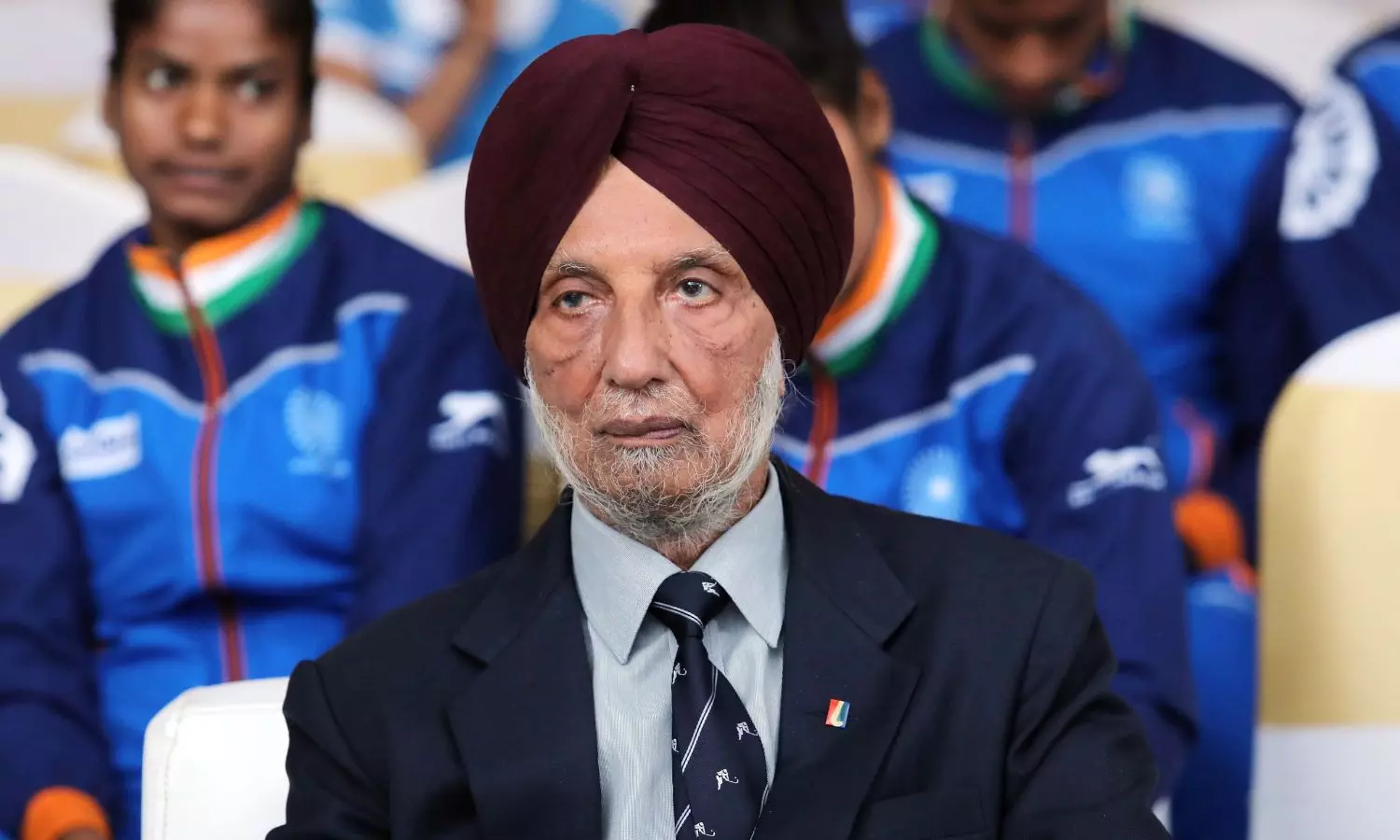
Harbinder Singh is an Olympic gold medallist.
Sixty years after India scripted hockey history at the 1966 Asian Games in Bangkok, Harbinder Singh still gets goosebumps when he hears the song that became the team's companion on its journey to gold.
"Whenever we went to a match, Shankar Laxman (India captain and goalkeeper at that time) would play 'Watan ki raah mein watan ke naujawan shaheed ho' in the team bus, and all the players would sing along. This would automatically motivate us," the 83-year-old three-time Olympic medallist said.
"Even today, when I hear this song, I get goosebumps," he added.
It also became a galvanising force before their Asian Games final against arch foes Pakistan, a match that India won to bring home their first ever gold at the continental showpiece.
The song and the final remain etched in the memory of the legendary centre-forward, who was also a part of India's 1964 Tokyo Olympics gold-winning team.
"We had won the gold medal at the Tokyo Olympics just two years earlier, and so the excitement was high, as most of the players from the Tokyo Olympics were on this team. We were determined to win our first Asian Games gold medal," he recalled.
India achieved that goal, beating two-time champions Pakistan. The match, however, appeared to be slipping away almost from the start.
With India losing a player to injury within the first five minutes and no substitution rule in place, the team was reduced to 10 men for almost the entirety of the match.
Eventually, after 70 minutes and the first period of extra time, a wounded Balbir Singh returned to the field to score the winner.
"The match started off rough, and within the first five minutes, our right winger, Railways' Balbir Singh, was injured by a Pakistani player's stick and had to be stretchered off," Harbinder remembered.
"Pakistan's team was very strong, and the entire 70 minutes remained goal-less," he said.
Even the first half of extra time, which lasted seven-and-a-half minutes, produced no breakthrough. Then, with five minutes left in the second half of extra time, came the moment that decided the gold medal.
"...Balbir was standing on the sidelines with a bandaged knee. Indian players began telling him to play on one leg. Why was he standing outside? After asking the umpire, he came on the field, and luckily, he scored the only goal of the match," said Harbinder, a Padma Shri awardee.
India's squad had three players named Balbir Singh -- the injured Railways winger and two others representing Punjab and the Services.
"At that time, hockey was the dominant sport, cricket wasn't as prevalent," Harbinder said, recalling how the team was welcomed with victory processions in Delhi, Amritsar and Jalandhar.
"Because hockey was an amateur sport, we couldn't receive any prizes for winning a gold medal, but victory processions were held in Delhi, Amritsar, and Jalandhar," he added.
There were no permanent national camps either, with players coming together only before major tournaments.
"At that time, the camp was held in Jalandhar. The Federation bore the expenses of the camp, there was no government funding at that time. The camp was held in the heat of June, July, and August.
"There were no AC coolers, and mosquitoes were rampant. It was quite tough, but the diet was excellent, authentic Punjabi food," he added.
Harbinder, who also won gold medals in the junior and senior 100m and 200m athletics events, feels modern hockey is faster but has lost some of the artistry that once made the sport a major spectator attraction.
"At that time, there were rules regarding offside, stick, and obstruction, so one had to play very carefully. The game relied heavily on umpires because technology wasn't present. Today's hockey isn't as fun to watch because the artistry is gone, and goals are often scored in three touches," he said.
"Spectators used to stand on their seats to watch the first pass, the return pass, and the dribbling. Many times, I have scored goals against mighty teams like Pakistan, England, Holland, and Germany by taking the ball from the centre line and dodging the entire defense," he added.
The veteran is also concerned about declining crowds at domestic hockey tournaments. He believes international players need to return to domestic competitions to restore spectator interest.
"We all played hockey for our departments, whether it was the Gold Cup, the Beighton Cup, or the Obaidullah Cup. A lot of spectators used to come to watch Indian players, but nowadays, international players don't play domestic hockey. If star players don't play, how will the sport grow in popularity?" he asked.
As India prepares for the Asian Games in Japan, Harbinder expects the Harmanpreet Singh-led side to challenge for gold but cautions against taking opponents lightly.
"Even the Asian Games are no longer competitive. The Indian team must win the gold medal again because the hockey of Japan, Malaysia, and Pakistan is no longer at the same level," he said.
"But Japan has already won the gold medal unexpectedly once (in Jakarta in 2018), and India should not take any team lightly. We must forget the World Cup failure and start afresh," he added, referring to the team's dismal eight-place finish last month.
(Except for the headline, this story has not been edited by The Bridge Desk. It is published from a syndicated feed.)