
Hockey
2026 FIH World Cup: India's hockey teams face their toughest test yet
Both Indian men's and women's hockey teams will start their 2026 FIH World Cup campaign in Pool D.
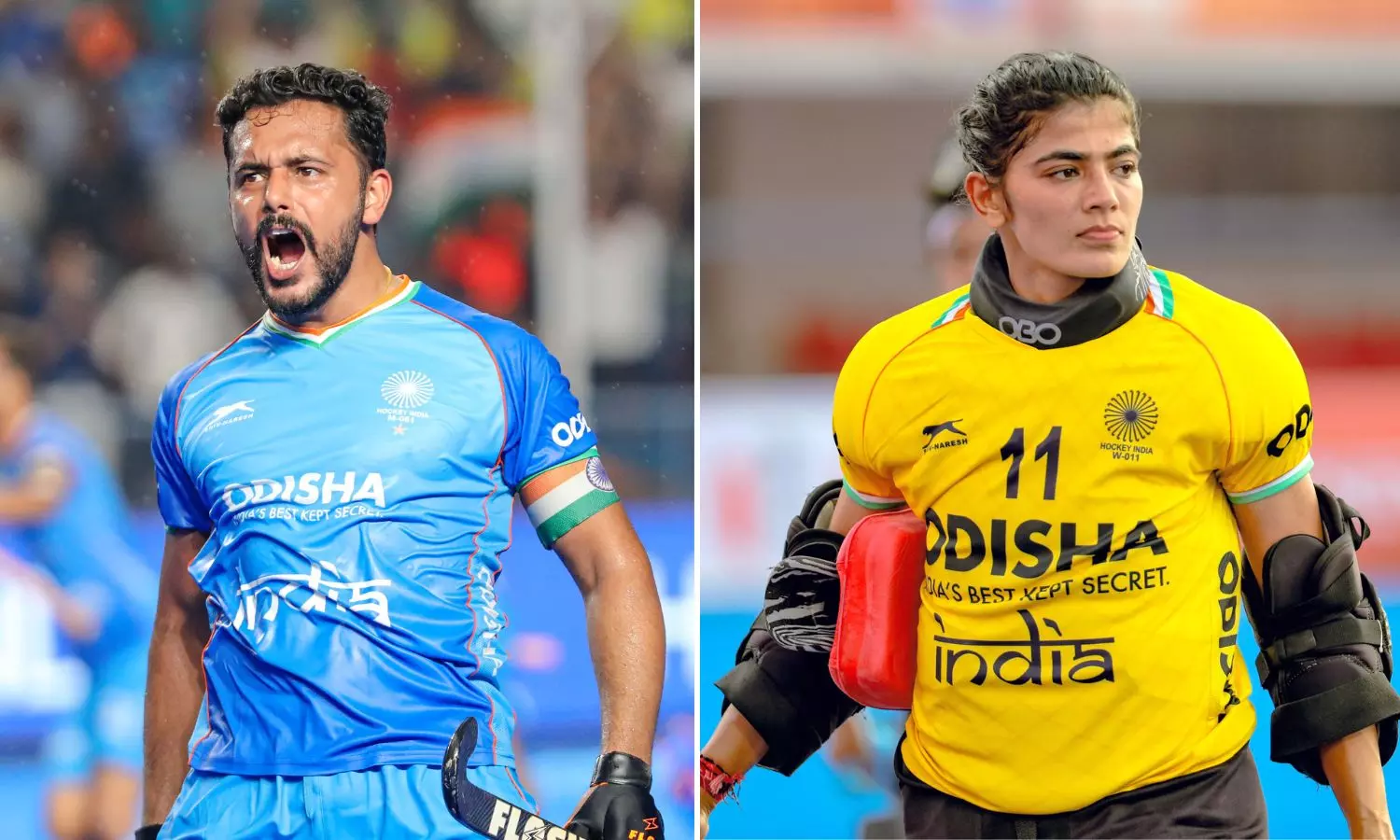
Both Harmanpreet Singh and Savita Punia (File Photo)
When the FIH Hockey World Cup begins on August 15 in Belgium and the Netherlands, it will not resemble any edition Indian fans have watched before.
The quarterfinal has been scrapped. In its place stands a two-phase gauntlet where points and goal difference from the group stage are carried forward into a crossover round, which means a sloppy win or a needless loss in Phase 1 can decide a team's fate weeks later.
For India's men and women, both drawn into brutal versions of Pools in Phase 1, this new mathematics could not have arrived at a more consequential moment.
Harmanpreet Singh and boys, a chance to end trophy drought
India's men travel to Amstelveen ranked 8th in the world, a number that undersells a side carrying back-to-back Olympic bronze medals and a 2025 Asia Cup title.
Coach Craig Fulton has leaned into the underdog tag deliberately, freeing his players from the suffocating expectations that derailed campaigns on home soil in 2018 and 2023.
Behind the scenes, mental conditioning specialist Paddy Upton, architect of a Swiss Alps boot camp designed to recalibrate how players respond under duress, has tried to harden a team that has historically wilted in tight, high-pressure finishes.
Pool D pits India against Wales, England, and Pakistan.
Wales and Pakistan should, on paper, be dispatched. Wales are World Cup debutants finding their feet, and Pakistan arrive in disarray, having lost every match of their last Pro League campaign and switched head coaches just hours before departure.
The real examination comes on August 17 against England, ranked third globally. Given how tightly the carry-over system links Phase 1 results to Phase 2 survival, this fixture is effectively a knockout match in disguise.
Win it, and India enter the brutal crossover pool, likely against the Netherlands and Argentina, with breathing room. Lose it, and they could find themselves needing near-perfect performances against two of the sport's superpowers just to reach the semi-finals.
The tactical worry is familiar. India's attack still leans heavily on Harmanpreet Singh's drag-flick, a weapon elite defences have had years to study.
If Abhishek, Sukhjeet Singh, and the midfield engine of Manpreet Singh and Hardik Singh cannot manufacture more from open play, India risk being a one-dimensional threat against opponents built to shut down exactly that dimension.
Salima Tete and co, rebuilding amidst rubble
If the men's story is about refining a already-strong template, the women's is about survival after institutional collapse.
The past two years have been chaotic. Janneke Schopman took an exit amid claims of feeling undervalued. It was followed by a turbulent stint under Harendra Singh that ended in December 2025 when eight senior players filed an 18-point complaint alleging harassment and outdated methods.
All of it led to the subsequent return of Sjoerd Marijne — the Dutchman who once led India to a famous fourth-place finish at Tokyo 2020 — tasked primarily with stitching the dressing room back together.
Marijne's man-management has already yielded one tangible result. They went on an undefeated run to the Nations Cup title that restored the team's Pro League status.
But the underlying game remains fragile. Nineteen of India's 27 goals in 2026 have come from set-pieces, an alarming dependency that mirrors the men's problem and was ruthlessly exposed in the Asia Cup final loss to China, where India's lead evaporated to a rapid-fire counter-attack.
Pool D offers no mercy to Salima Tete and co. China (4th, Olympic silver medallists), England (7th, fresh off beating India in the World Cup Qualifier final), and South Africa.
Beating South Africa is non-negotiable for the women in blue. The real task, however, will be stealing points from either China or England to finish in the top two.
Should India somehow advance, the Phase 2 awaits potentially with world champions and co-hosts the Netherlands and a formidable Australian side. These are opponents who will punish exactly the kind of midfield turnovers and low goal-output that have plagued India all year.
The Indian men have the deeper bench, the calmer preparation, and a genuine shot at ending a 51-year wait for a World Cup medal, provided they treat the England match with the urgency of a final.
The women, meanwhile, face a steeper climb, still emerging from a year of turmoil, needing not just tactical improvement but the emotional stability Marijne has only begun to rebuild. Escaping Pool D would already qualify as one of Indian hockey's finest modern achievements, regardless of what follows in the merciless crossover stage that awaits.