
Football
Inside SuperNova: Capri Sports' bet on India's football future
A weekend tournament in Bengaluru marks the first step of a grassroots pathway meant to keep girls in football long after the whistle blows.
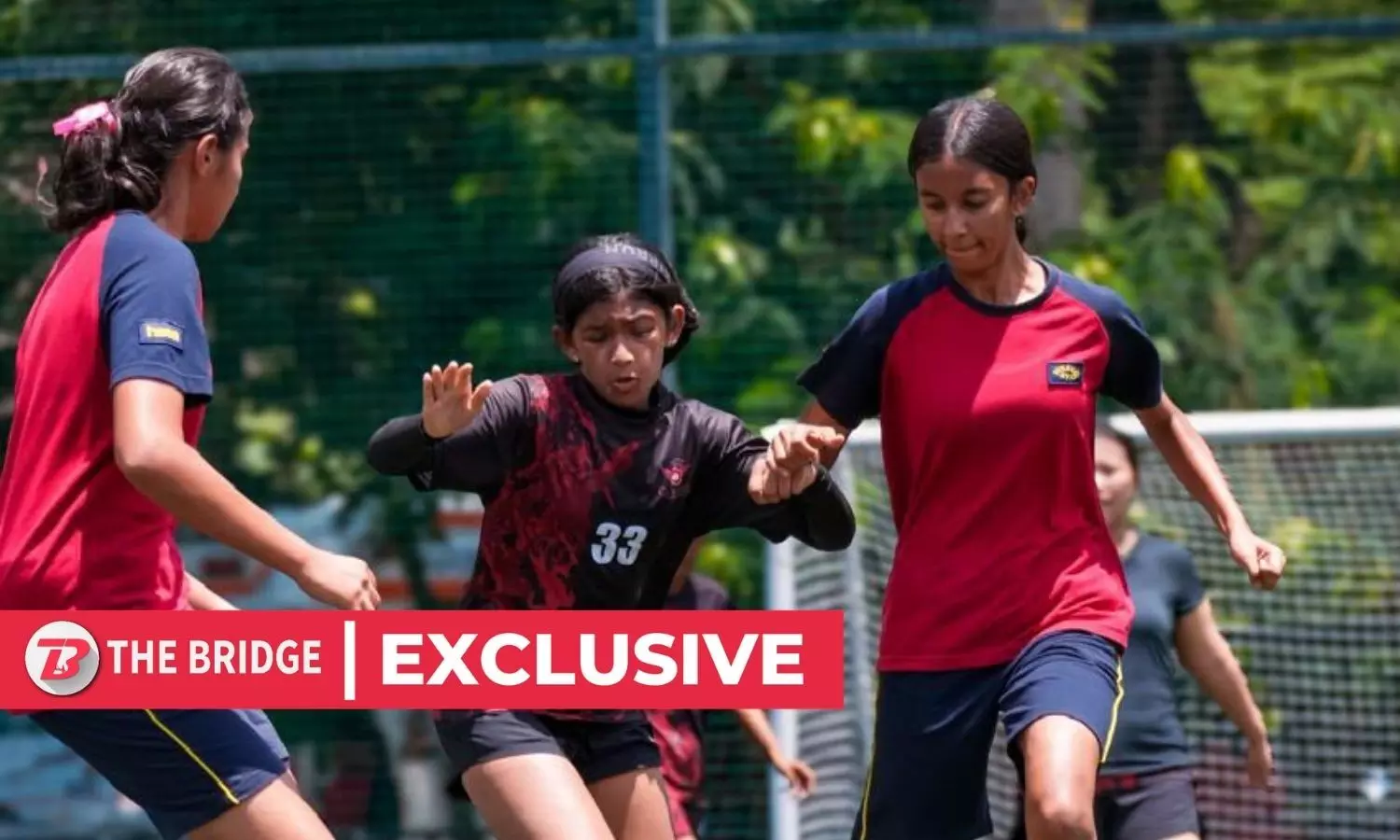
Girls from schools across Bengaluru take the field at the inaugural SuperNova Football Championship (Photo credit: Special arrangement)
Over two days in Bengaluru, 69 matches were played, and 222 goals scored, as girls from U13 to U17 turned out from schools across the city.
Numbers alone, though, only offer a hint at what the weekend meant.
The inaugural SuperNova Football Championship, staged by Capri Sports under its Nova Sports banner, was never meant to be just another school's tournament. It was built as the first visible step in a longer pathway — one designed to keep girls playing football long after the final whistle blows.
Grassroots come first
"We had to look at grassroots first," said Jinisha Sharma, Director and Promoter at Capri Sports, to The Bridge, describing the thinking behind the initiative.
The goal, she explained, isn't just turnout or a tick-box exercise. Instead, it was about "keeping the girls in the sport of football by ensuring that they feel the sport has been built for them."
And Bengaluru was chosen deliberately.
"We have to build an entire pathway," said Apurv Gupta, Director, Contact Sports at Capri Sports, pointing to coaching standards and structured age-level progression. Bengaluru's existing football culture, he added, made it the clearest place to first demonstrate that pathway before expanding further.
Grassroots initiatives like this, Jinisha argued, are the foundation of the entire ecosystem.
"Let's grow the participation, let's grow the numbers where they first start to discover their love for football," she said, while attributing the move to begin in Bengaluru as a deliberate strategy before scaling to markets where girls' football is not yet popular.
What is interesting about the initiative is that the coaching philosophy here is deliberately girl-centric.
Apurv noted that women's football has long borrowed men's training methods, leaving players "10x more likely to get an ACL injury." Capri Sports, therefore, is building an age-appropriate curriculum instead, tuned to India's genetic and regional diversity across strength, conditioning, and technique.
Former India international Dalima Chhibber and Capri Sports Director and Promoter Jinisha Sharma with the young footballers at the inaugural SuperNova Football Championship prize distribution in Bengaluru
(Photo credit: Special arrangement)
"The future is bright"
For parents watching from the sidelines, the shift feels overdue.
"It's a great platform for women's football," said Vishal Nagpal, father of ninth-grader Tiana. "Sport has been mainly male-dominated. It's good to see that there are more tournaments that are women-friendly."
The players felt it too.
Shreya, a young participant, loved the tournament: "I really like the exposure... the experience, it's really nice playing with so many teams. We have a lot of new players right now, so for them it's an important stage of learning."
Former India international Dalima Chhibber called the turnout rare and meaningful.
"It's very rare that you see so many teams and so many girls turn out, come play, and actually have fun," she said. Growing up, she had no women role models in the sport and had to look abroad or play with boys to get exposure.
That, she believes, is now changing.
"The future is bright... there is so much potential," she said, cautioning that talent alone isn't enough. "Do we have a structure? Do we have people supporting the sport?" she asked, calling consistency and youth development the missing pieces India must still build.
Jinisha is candid that Bengaluru is only the beginning.
"This is just... our first expression," she said, describing plans for residential academies, school programs, and pathways to exposure abroad for girls who dream of playing for India.
The model will expand deliberately, city by city, starting from strength before moving into markets "where girls' football is not that popular," where interest must first be cultivated rather than assumed. The ambition, she said, "is one space that is giving a girl the entire opportunity," a single ecosystem tracking a girl from her first touch of a football through to a possible national career, wherever in India she begins.
What Bengaluru showed, ultimately, wasn't just goals and trophies.
It was proof that when a structured pathway is offered, girls show up, compete hard, and want more.
How soon Capri Sports can scale that promise nationally may determine the rate at which India's girls transition to the upper echelons of national and international football.