
Football
Capital Gains: Delhi claims three spots in the Indian Women's League
HOPS FC coach Ravi Kumar Punia reflects on the club’s unbeaten IWL 2 title-winning campaign and Delhi becoming home to three clubs in the Indian Women’s League.
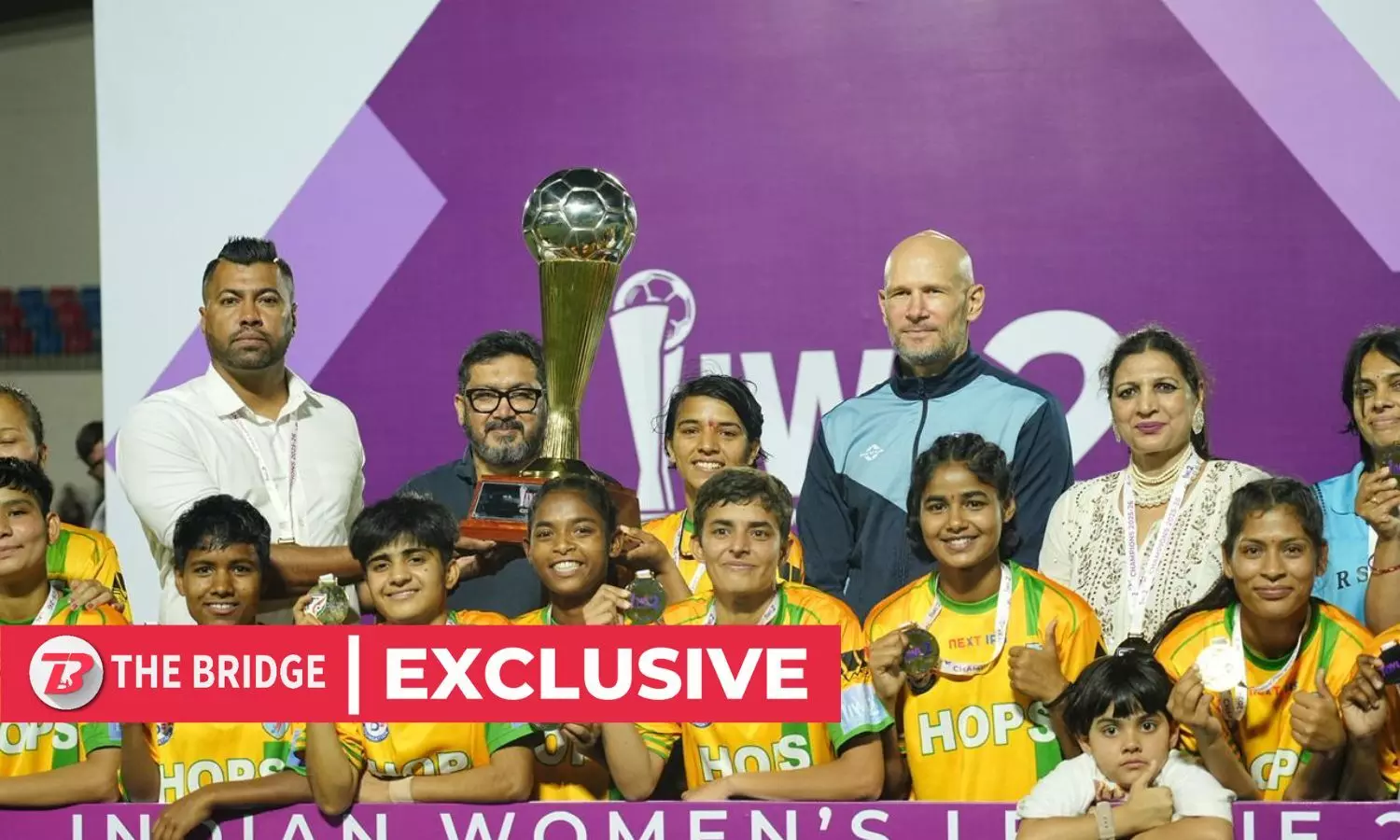
A year after they were relegated to the Indian Women's League (IWL) 2, HOPS FC dominated the 2025-26 season in the second tier, winning all nine matches and conceding no goals in the final round.
The title win propelled them back to the top tier IWL. For head coach Ravi Kumar Punia, it was redemption. But for Delhi Football, it is something more.
For the first time ever, the national capital city will have three clubs in the premier division of Indian women’s football next season: HOPS FC, Juba Sangha FC and Garhwal United FC.
"Three clubs from Delhi, that is definitely something that shows football is developing," Punia told The Bridge in an exclusive conversation.
“Football is mostly in the west, south and northeast side. But now football is shifting to the north also. The players are mostly from nearby states only, so that is a very proud moment for everyone.”
The rise of Delhi’s clubs signals an important shift in Indian women’s football.
Traditionally, the sport’s strongest centres have been in Manipur, West Bengal, Odisha and Kerala. But Delhi’s emergence as a hub, powered by strong grassroots structures and increasing investment, is beginning to change that landscape.
Ravi Kumar Punia wth the IWL 2 trophy
Delhi rivalries could transform women’s football
The arrival of three Delhi clubs in the IWL could also create something Indian women’s football has lacked consistently: local rivalries.
Punia believes those rivalries are essential for growing fan culture and competitiveness.
"Rivalry is very important for development," he said. "You can see in Kolkata also when there is a big match, so many people come."
"In women’s football, there are not many rivalries right now. But now with three teams from Delhi, it becomes a very tough competition, and that helps the Delhi teams," he added.
The prospect of multiple Delhi derbies next season could significantly boost local interest in the women’s game. It also creates more opportunities for young girls in the region to see a direct pathway from grassroots football to the professional stage.
"Now you have three IWL clubs and maybe new IWL 2 clubs also coming this year," Punia said in a message to aspiring footballers.
"So you have a good platform to perform. If you perform, you will definitely get selected. Be punctual, be honest with your profession and give your hundred percent."
From relegation to domination
HOPS FC’s title-winning campaign carried extra emotional weight because of what happened the previous year.
The club had suffered relegation from the IWL after a difficult season in which several players and staff members were unavailable due to National Games commitments.
This season, however, things were different.
"Our main target was to qualify for IWL any how," Punia said.
"This time we were very much prepared, very much focused and comfortable in the championship,” he added.
Under Punia, HOPS became one of the most disciplined sides in the division. Their defensive solidity stood out throughout the campaign, while the team’s physicality and direct attacking approach overwhelmed opponents.
The final-round clash against Juba Sangha, another Delhi side chasing promotion, became one of the defining moments of the season.
"It was like a Delhi derby. The players were excited, and even the opponent team was excited. We were very motivated for that match," said Punia.
A coach deeply connected to his players
Punia’s journey into coaching came after injuries disrupted his playing career. A former centre-back who represented Haryana and played in the I-League with clubs like Rajasthan United FC, he transitioned into coaching while continuing to stay closely connected to the sport.
"I shifted my passion from being a player to a coach," he said.
"I want to give 100 percent whether as a coach, player or mentor. I want to stay connected to football anyhow."
That connection is perhaps strongest in the way he works with his players.
Many members of the HOPS squad come from Haryana and northern India, regions Punia knows intimately. Rather than maintaining a strict coach-player distance, he describes the relationship as familial.
"These girls are mostly from my district only," he explained. "They don’t see me only as a coach. They see me like a brother or family."
"They speak to me about injuries, diet, studies, family issues, everything. That connection is very important."
That close-knit environment has become one of HOPS FC’s biggest strengths. Founded through Sanjay Yadav’s grassroots-driven vision, the club has long focused on developing Indian talent rather than relying heavily on star signings.
Punia credited the club management, including owner Yadav and team manager Sonika Vijarniya, for creating a supportive atmosphere.
"They told me, 'You just do whatever you want to do. We are standing with you,'" he said.
"If there is even one percent misunderstanding in a team, then performance suffers. For us, everyone, players, physio, assistant coach, support staff, we are like one family."