
Football
“Our goal is FIFA World Cup”: Grace Dangmei ahead of the AFC Women’s Asian Cup 2026
India forward Grace Dangmei speaks about the team’s World Cup dream and the challenge of Japan, Vietnam and Chinese Taipei at the Asian Cup in Australia.
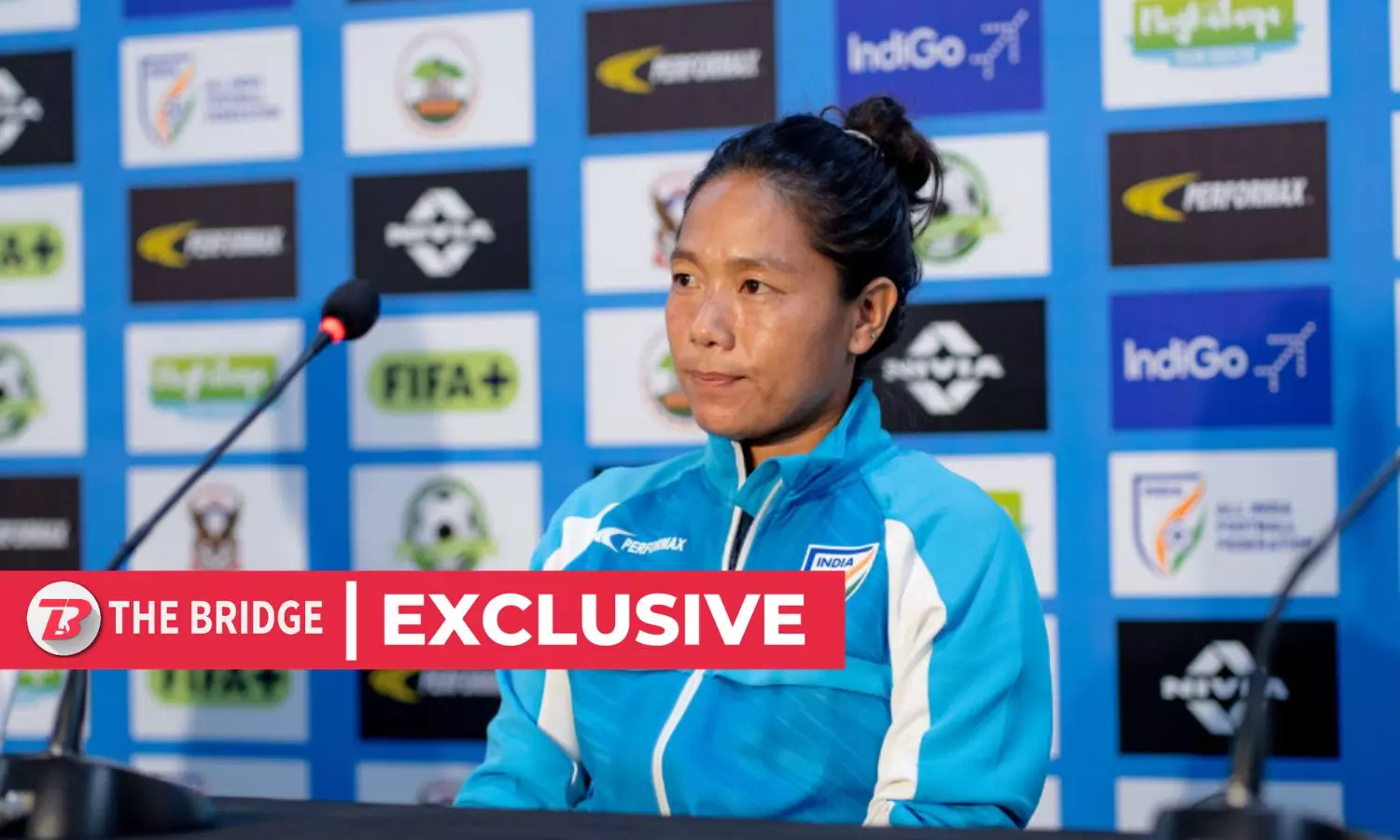
Grace Dangmei (Photo credit: AIFF)
There is a line that Grace Dangmei returns to more than once, almost as if it has become a rhythm inside the Indian dressing room over the past month.
“Our goal is to qualify for the World Cup.”
It is not said with the wide-eyed romance that once accompanied such conversations in Indian football. It comes out calmly, matter-of-factly, as if it is a target that can be worked towards in the gym, on the training pitch in Antalya, in long team meetings where senior players pull the younger ones aside and tell them to breathe.
For a team that has already made history by qualifying for the AFC Women’s Asian Cup Australia 2026 on merit, topping their group with 24 goals scored and just one conceded, and sealing it with a gritty win over Thailand, the shift in language is striking.
Participation is no longer the story. Progress is.
And progress, this time, has a pathway. The Asian Cup is the primary route to the 2027 FIFA Women’s World Cup in Brazil. Reach the knockouts, and the dream becomes tangible.
Grace Dangmei spoke to The Bridge over a video call from Perth, where India will open their AFC Women’s Asian Cup campaign.
A camp built on a shared obsession
India’s final preparation block in Türkiye was intense, closed off from the public eye, and, by all accounts, transformative in its collective focus.
Dangmei scored decisive winners in friendlies, but she brushes aside the individual narrative.
“In the Türkiye trip, it was not just me,” she says. “The entire team gave their best, in practice, in the gym, everywhere. We are motivating each other that we should give our best and qualify for the World Cup. That is the motive for all of us.”
It is a revealing answer, not because it downplays her contribution, but because it captures the internal messaging of this squad. The language is always plural: we, together, the entire team.
This is also where the influence of newly appointed head coach Amelia Valverde has begun to settle in.
The Costa Rican arrived in January, not as a replacement for Crispin Chettri but as reinforcement, another voice with World Cup experience in what is a race against time.
Dangmei is careful not to frame it as a before-and-after moment.
“The team has been strong from the beginning,” she says. “It’s not that one coach came and everything changed. But we have to stick to her plan. She is giving lots of energy and positive vibes. We have to convert that on the field.”
The emphasis, again, is on execution.
The opener that feels like a final
India begin their campaign on March 4 in Perth against Vietnam, a side that played at the last World Cup and has historically had the better of this fixture.
Any external suggestion that this is the most “winnable” game in the group is dismissed immediately.
“They are a very good team. They are a World Cup team,” Dangmei says.
Then she pauses, and the tone shifts.
“For me, the first match will be like the last match of my life. I have to give my all so that we can proceed with the remaining matches. For me, it is a do-or-die game.”
It is the kind of sentence that reveals how the tournament is being approached internally. Japan, Vietnam and Chinese Taipei are not being ranked in order of difficulty. They are being treated as three high-intensity, must-win moments.
“Every match is like a bullet game for us, it'll all be high-intensity games,” she says. “We need to give our best in all three to move forward.”
India is the lowest-ranked side in a group that includes Asian heavyweights Japan, a rising Vietnam and a historically strong Chinese Taipei. The odds, on paper, are steep.
But the context is different this time.
This is their first proper appearance at the finals in 23 years. They are here on merit. They arrive after a qualification campaign that included a 13–0 win over Mongolia and a decisive victory over hosts Thailand in a winner-takes-all game.
And they arrive with a squad that speaks openly about the World Cup.
“The coach has taught us what we have to do, when to defend, when to attack,” Dangmei says. “We have to unite as a team to beat the top teams. We need to be positive and have a vision for the future.”
One of the recurring criticisms of Indian teams, across age groups and genders, has been the drop in tempo in the second half of big games.
Dangmei does not see it as a tactical flaw as much as an emotional one.
“There will be lots of ups and downs, lots of pressure,” she says. “We need to keep calming ourselves in those situations. It is not the responsibility of one or two players.”
That emphasis on collective responsibility runs through every answer she gives.
It also extends to the relationship with the supporters.
“We are here because of the fans,” she says. “If they don’t give us exposure, people will not know about Indian women’s football. Keep supporting us in good times and bad.”
The senior who once looked up
The athletic base that made Dangmei such a dangerous wide player was built long before football became serious.
She ran the 100m and 200m as a teenager, played multiple sports, and carried that physical foundation into the game.
That speed has taken her from Dimdailong village in Manipur to league titles in Uzbekistan and three Indian Women’s League trophies with Gokulam Kerala.
It has also made her one of the few players in this squad with both longevity and continuity, debuting internationally in 2013 and still central to the attack in 2026.
There is a particular kind of symmetry in Dangmei’s current role.
A decade ago, she was the young player watching Bala Devi and the senior India group from a distance, trying to understand what professionalism looked like.
“My turning point was when I first met the senior players,” she recalls. “Before that, football was just for fun. But the way they behaved, the way they played at the international level, it became my dream that one day I could be like them.”
Now she is part of the group holding team meetings, pulling aside nervous youngsters in training, telling them to slow down.
“We tell them not to be hyper. First observe, then play. We tell them this should be our dream, we have to work together and support each other.”
In a few weeks, in Perth and then Sydney, the Blue Tigresses will walk into the biggest tournament of their careers.
For Dangmei, the framing is already clear. Three chances to move closer to a destination that once felt impossibly distant.
“Our goal,” she concludes, “is to qualify for the World Cup.”