
ESports
Why esports is becoming impossible to ignore in Indian sport
The Government of India formally recognized esports in December 2022, when a Presidential Gazette Notification brought competitive gaming under the Ministry of Youth Affairs and Sports’ purview.
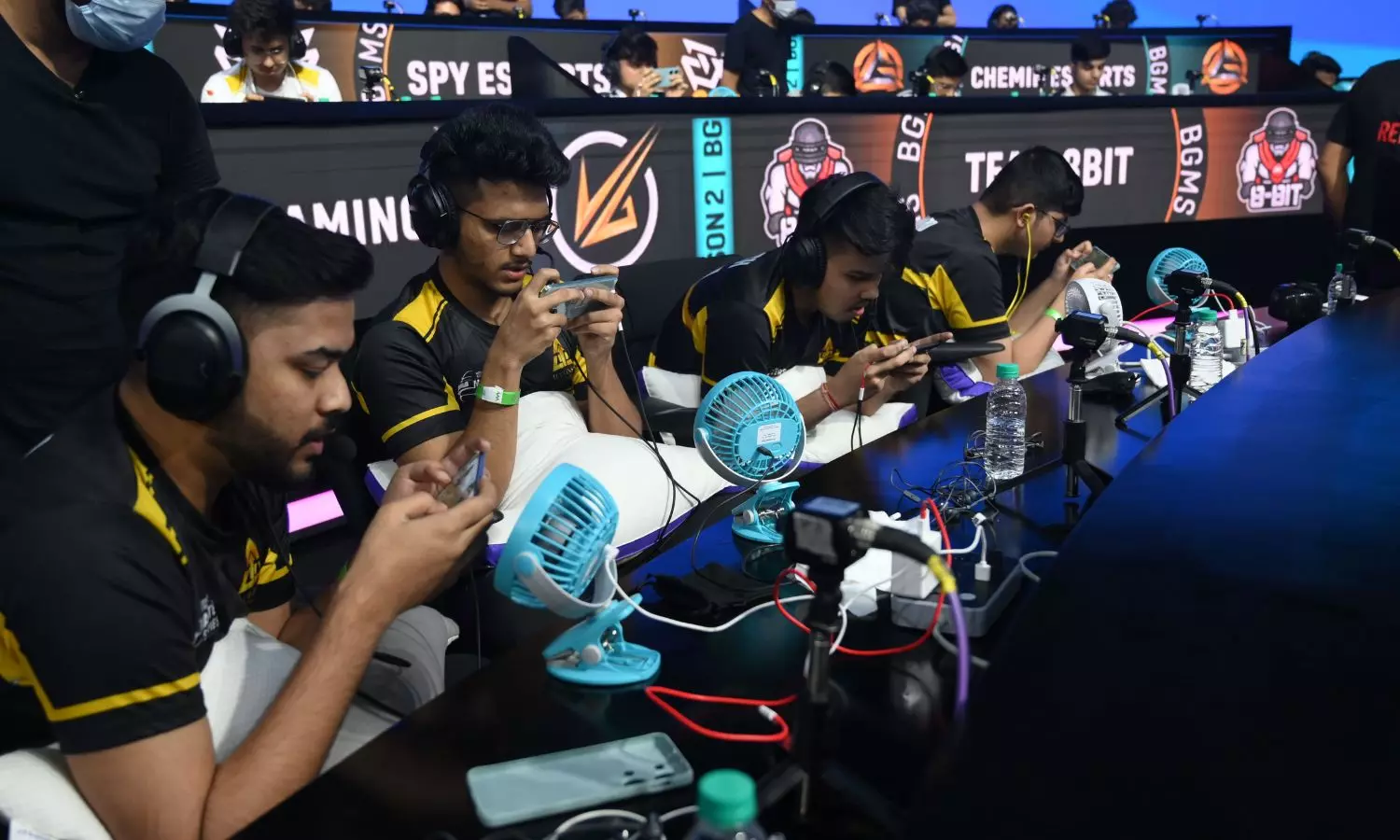
The National Centre of Excellence (NCoE) for Animation, Visual Effects, Gaming, Comics, and Extended Reality (AVGC-XR) represents a transformative leap for India’s gaming and esports industry. (Representative photo)
For decades, the Indian sporting imagination was bounded by the boundary rope of a cricket pitch. But walk into any urban cafe or ride a metro in 2026, and you’ll see a different kind of athlete in training.
They aren't usually wielding bats but rather they are mastering "frame-perfect" maneuvers on high-end smartphones.
Once dismissed as a distraction, esports has officially shed its "hobby" label to become a cornerstone of the Indian sporting landscape.
A Government-Sanctioned Revolution
The most significant shift hasn't been in the pixels, but in the policy. The Government of India formally recognized esports in December 2022, when a Presidential Gazette Notification brought competitive gaming under the Ministry of Youth Affairs and Sports’ purview.
This along with the Online Gaming Bill 2025, which decoupled competitive gaming from the murky waters of "real-money gaming" and gambling, has propelled esports to newer heights. Today, esports is a medal discipline in the CM Trophy in Tamil Nadu and a staple in the Khelo India Youth Games.
By providing a structured regulatory framework, the government has given parents the one thing they previously lacked: a reason to view "gaming" as a legitimate career.
To explore more opportunities across various sports, click here for more information.
The 5G Catalyst and Mobile Dominance
India’s esports story is uniquely mobile-first. While the West grew up on PCs and consoles, India’s revolution was televised and played on handheld screens.
The widespread rollout of 5G technology has been the great equalizer, reducing latency to sub-5ms levels. This technical leap has turned every budget smartphone into a competitive tool, democratizing access to high-stakes titles like BGMI (Battlegrounds Mobile India), Free Fire, and others.
Economic Might and Global Ambition
The numbers behind the movement are staggering. The Indian esports market, valued at approximately $203 million in 2025, is projected to soar toward the half-billion-dollar mark by the end of the decade.
Major homegrown players like NODWIN Gaming have gone from hosting local tournaments to acquiring global IPs like the Evolution Championship Series (EVO), signaling India’s intent to be an owner, not just a consumer, of the global gaming economy.
From Living Rooms to Stadiums
The spectacle of esports is now rivaling traditional sports. LAN (Local Area Network) events have evolved into massive stadium-filling productions. In 2025, the Gujarat Esports Open and the Delhi Esports Open drew thousands of physical spectators and millions of digital viewers.
Brands that once exclusively sponsored cricket – telecom giants, automobile manufacturers, and lifestyle labels – are now redirecting their sponsorship and advertising budgets (which account for over 60% of esports revenue) toward gaming influencers and teams.
The Road Ahead
Despite the meteoric rise, challenges remain. The industry still grapples with a "brain drain" where top talent looks to international leagues for better infrastructure.
However, with the emergence of incubators like LVL Zero and the inclusion of esports in the 2026 Asian Games and the 2027 Olympic Esports Games, the path to a podium finish has never been clearer.
Esports in India is no longer a subculture. It represents the aspirations of a young, digital-native population that views the screen not as a barrier, but as a field of play.
As the lines between physical and digital sports continue to blur, one thing is certain: in the new era of Indian sport, the game has only just begun.