
ESports
Indian Super Gaming League aim to build India’s IPL moment for Esports
Indian Super Gaming League (ISGL), India’s first franchise-based esports competition, launches with eight teams across five titles, aiming to bring structure and scale to the industry.
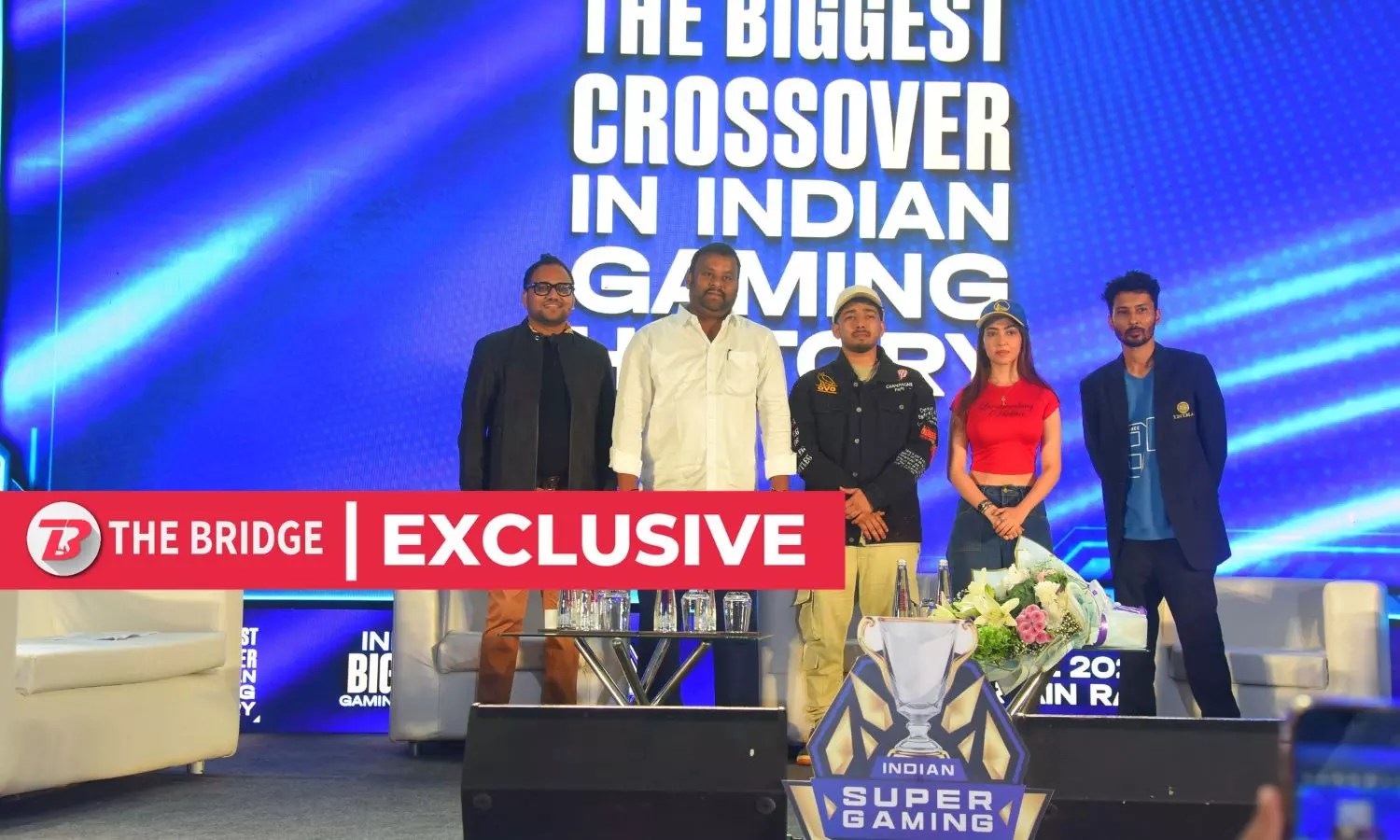
Indian Super Gaming League aim to build India’s IPL moment for Esports (Photo credit: ISGL)
India's esports ambitions now have a structural foundation. The Indian Super Gaming League (ISGL), the country’s first franchise-based national esports competition, has been launched by former Route Mobile CEO Gautam Badalia and professional gamer Santanu Basu, who has represented India at international tournaments.
Together, Badalia and Basu are attempting to build what they describe as India’s “IPL moment” for esports, a scalable, credible league model featuring eight franchises competing across five gaming titles.
In an exclusive interview with The Bridge, the founders outlined their vision of creating for esports what the Indian Premier League did for cricket: structure, visibility, and commercial scale. The inaugural season will feature city-based qualifiers leading into a grand finale, expected to be held in Vizag or Mumbai in June.
The league’s regional qualifiers are already underway, beginning in Mumbai at NESCO on Sunday and extending across multiple cities, including Dimapur.
Franchise model and competitive structure
The ISGL draws its franchise base from established sporting ecosystems. Five Indian Super League clubs, Mumbai City FC, FC Goa, Chennaiyin FC, Kerala Blasters FC, and Inter Kashi, have partnered with the league. They are joined by Pro Kabaddi League side Puneri Paltan, along with Bangalore Bhargavas and Andhra Agneyas.
Players will compete across five titles: Chess, EA Sports FC 26, Call of Duty: Mobile, FAU-G, and Cricket 26. The competition structure includes regional qualifiers feeding into a national finale, mirroring traditional franchise league formats.
The two founders bring contrasting but complementary backgrounds. Badalia has over two decades of experience in investment banking, capital markets, and corporate growth. Basu, meanwhile, represents the player’s perspective, having balanced competitive gaming with academics, securing a JEE rank of 9182 before completing a B.Tech in Information Technology.
Their personal sporting interests differ as well. Badalia leans towards chess, while Basu is an avid football fan, but both are aligned in their ambition to elevate India within the global esports ecosystem.
Addressing the structural gaps
The ISGL is designed to address three key gaps that the founders believe have held Indian esports back:
- Lack of professional structure: Despite having over 500 million gamers, India has lacked a franchise-based league capable of converting this base into viable professional careers.
- Mobile-first accessibility: Recognising India’s gaming reality, the league’s titles and infrastructure are built around accessible, low-cost platforms rather than high-end setups.
- Cultural legitimacy: With esports now part of the Asian Games, the league aims to counter parental scepticism by positioning gaming as a skill-based discipline requiring strategy, reflexes, and decision-making.
Gautam Badalia said:
"We want to create something similar to what the Indian Premier League did for cricket. Before IPL, there were already many cricket tournaments in India. But IPL revolutionised the sport by bringing structure, scale and credibility. That is what we are trying to build for esports. If this league helps produce even one medal winner at the Asian Games, that would be a huge success."
Santanu Basu added:
"The biggest challenge for Indian gamers is the absence of a structured league. Because of that, esports is often seen as casual gaming rather than a professional career. Professional gamers don't play endlessly; practice sessions are structured and high-quality. Our goal is to create the right ecosystem so Indian gamers can compete with the best in the world."