
Commonwealth Games
The relevance and irrelevance of Commonwealth Games for India in modern era
Ten sports, four venues, roughly 3,000 athletes, and a budget model, Glasgow 2026 is built for survival and not around India's traditional strengths.
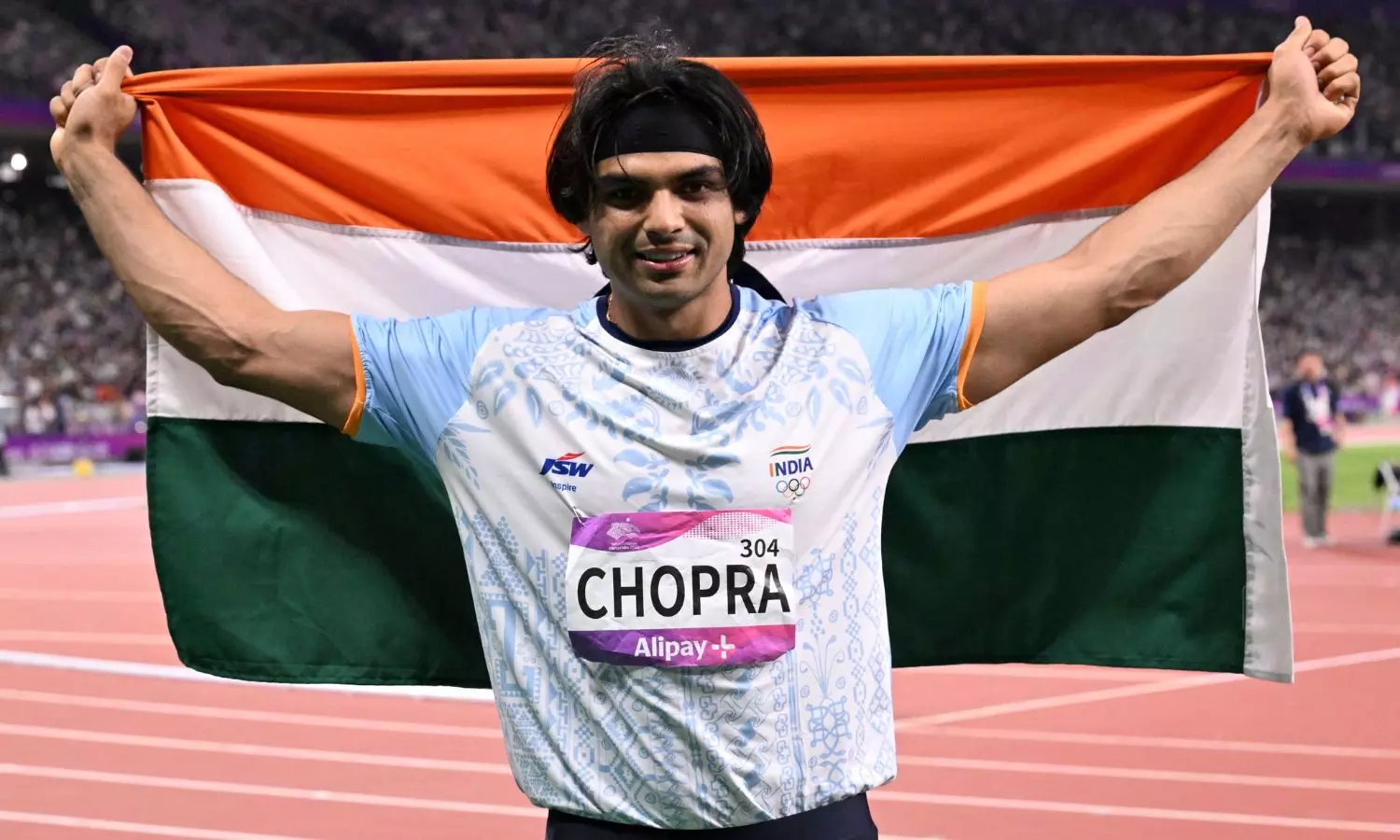
Neeraj Chopra (Photo credit: AP)
When Glasgow's Hydro arena lights up on July 23 for the opening ceremony of the 2026 Commonwealth Games, it will do so for an event which has been stripped down to its bare bones. Just ten sports, four venues, roughly 3,000 athletes, and a budget model built explicitly to avoid the excesses that once defined this quadrennial gathering.
For India, a nation whose relationship with the Commonwealth Games has always been layered with pride, ambition and unresolved discomfort, Glasgow 2026 arrives as less a celebration than a referendum.
Is this Games still worth India's attention? Or has it quietly become a relic that the country keeps showing up to out of habit, nostalgia and diplomatic courtesy? The same questions which have been asked for years with no concrete answers.
A colonial hangover which never left
The Commonwealth Games were born in 1930 as the British Empire Games – a sporting expression of imperial kinship, conceived at a time when India was still under colonial rule and had no say in the architecture of the club it would later join as a "free" member following the London Declaration, 1949 two years after its independence.
Over the years, the Games were rebranded from Empire Games to Empire and Commonwealth Games to, simply, Commonwealth Games. But it never fully erased the event's founding logic: a family reunion for nations that were once, in blunt terms, subjects and rulers.
For India, competing at these Games has always carried a faint historical irony. Athletes trained in Bhiwani's boxing academies or Haryana’s wrestling akhadas compete for medals within a structure inherited from the very empire, whose departure India's freedom movement and freedom fighters struggled for.
It is not that this history disqualifies the Games from relevance – plenty of post-colonial institutions have been repurposed and reclaimed – but it does mean India's engagement with the Commonwealth Games can never be entirely free of that shadow.
Especially not at a moment when the country is asserting itself as a civilisational superpower or Vishwaguru rather than a former colony grateful for a seat at the table.
The numbers tell complicated story
Performance-wise, India's Commonwealth Games record has been a genuine bright spot in its sporting history, which is precisely what makes the current moment so awkward.
India's finest hour came at home, in New Delhi in 2010, where the host nation claimed 101 medals – the only time it has crossed the century mark at any single edition, finishing second on the table.
Manchester 2002 remains India's next-best campaign, with 69 medals. Birmingham 2022 saw India finish fourth overall with 61 medals, powered heavily by wrestling, badminton and weightlifting. These are disciplines where Indian athletes have historically punched above their Olympic weight because the depth of Commonwealth competition, which excludes powerhouses like the United States, China or Russia, offering a more winnable stage.
This is the uncomfortable truth beneath India's Commonwealth Games enthusiasm: the Games have functioned less as a true test of sporting supremacy and more as a curated arena where India's medal cabinet looks far shinier than it does at the Olympics or World Championships.
Shooting alone has yielded India 135 Commonwealth Games medals, including 63 gold; wrestling has added 114 more. These are not marginal numbers but rather the backbone of India's Commonwealth identity.
Glasgow's great shrinking act
Which is why the shape of Glasgow 2026 lands as such a blow. After Victoria, Australia, withdrew as host in 2023 citing ballooning costs, Glasgow stepped in as a low-cost, low-risk alternative but on its own austere terms.
The programme was pruned to just ten sports across four venues clustered within an eight-mile radius, nine fewer sports than Birmingham hosted four years earlier.
Gone are hockey, cricket, table tennis, squash and – most painfully for India – shooting (it didn’t feature in Birmingham 2022 either, which led for a boycott call from a soon-to-be Olympic medallist Manu Bhaker), wrestling and badminton, the very disciplines responsible for the bulk of the country's historical medal haul.
The Badminton Association of India called the exclusion a "huge setback", warning that nearly 40 medals worth of opportunity had effectively been stripped away from the country.
Hockey coach Pritam Siwach, meanwhile, had termed it a "shocking conspiracy" which is "highly demotivating for sportspersons".
Shooting was left out reportedly because the nearest suitable range lay too far from Glasgow's compact venue footprint; wrestling and hockey fell to scheduling and cost calculus that had little to do with sporting merit and everything to do with a host city trying to stage a viable Games on a shoestring.
What remains are athletics, swimming, track cycling, netball, boxing, judo, gymnastics, weightlifting, lawn bowls and 3x3 basketball. It is a perfectly respectable sporting menu, but not one built around India's traditional strengths.
For Indian fans and administrators, Glasgow 2026 will likely be remembered as the Games where the medal tally shrank not because Indian athletes underperformed, but because the goalposts were dismantled and moved to a newer direction.
Why does India still want to host?
Here lies the central paradox of this article's title. Even as Glasgow 2026 exposes the Commonwealth Games’ diminished, almost provisional status on the global sporting calendar, India has spent the last two years pursuing hosting rights for the 2030 centenary edition with genuine enthusiasm and won.
In November 2025, Commonwealth Sport's General Assembly confirmed Amdavad (Ahmedabad) as host of the 2030 Games, beating out interest from Nigeria and an earlier withdrawal from Canada.
It will be only the second time India hosts the event, 20 years after Delhi 2010, and the honour of staging the Games' hundredth anniversary carries obvious symbolic weight.
The explanation for this apparent contradiction is not really about the sport at all. It is about soft power, infrastructure legacy, and India's broader ambition to become a serial host of global events – a trajectory that includes its stated interest in bidding for the 2036 Olympics.
Hosting the Commonwealth Games lets India showcase stadiums, transport corridors and hospitality capacity built for events like the 2023 Cricket World Cup, and lets the government present a growth story to a global audience.
Union ministers were quick to frame the 2030 win as validation of a decade of infrastructure push, tying it explicitly to larger Olympic aspirations.
Whether the Games themselves, reduced, contested and increasingly hollowed of blue-riband disciplines, still deserve that kind of political capital is a separate question from whether hosting one serves India's strategic interests.
The honest answer is that the Commonwealth Games are neither fully relevant nor fully irrelevant for India today. They occupy an awkward middle ground the country hasn't decided how to name.
As pure sport, shorn of shooting, wrestling and badminton, Glasgow 2026 offers India a diminished stage. As a platform for soft power, urban branding and Olympic ambition, the Games remain valuable enough that India was willing to fight for the right to host them again in 2030.
Perhaps the most honest thing Indian sport can do heading into Glasgow, and beyond it into Ahmedabad, is stop pretending the Commonwealth Games are still the prestige event they once were; and start being clear-eyed about exactly what value they still offer, and to whom.