
Commonwealth Games
The 11th-hour nation: Two decades of India pulling its own athletes off the plane for doping
Withdrawing athletes already named in the squad for doping ahead of any multi-sporting event is not new for Indian sports.
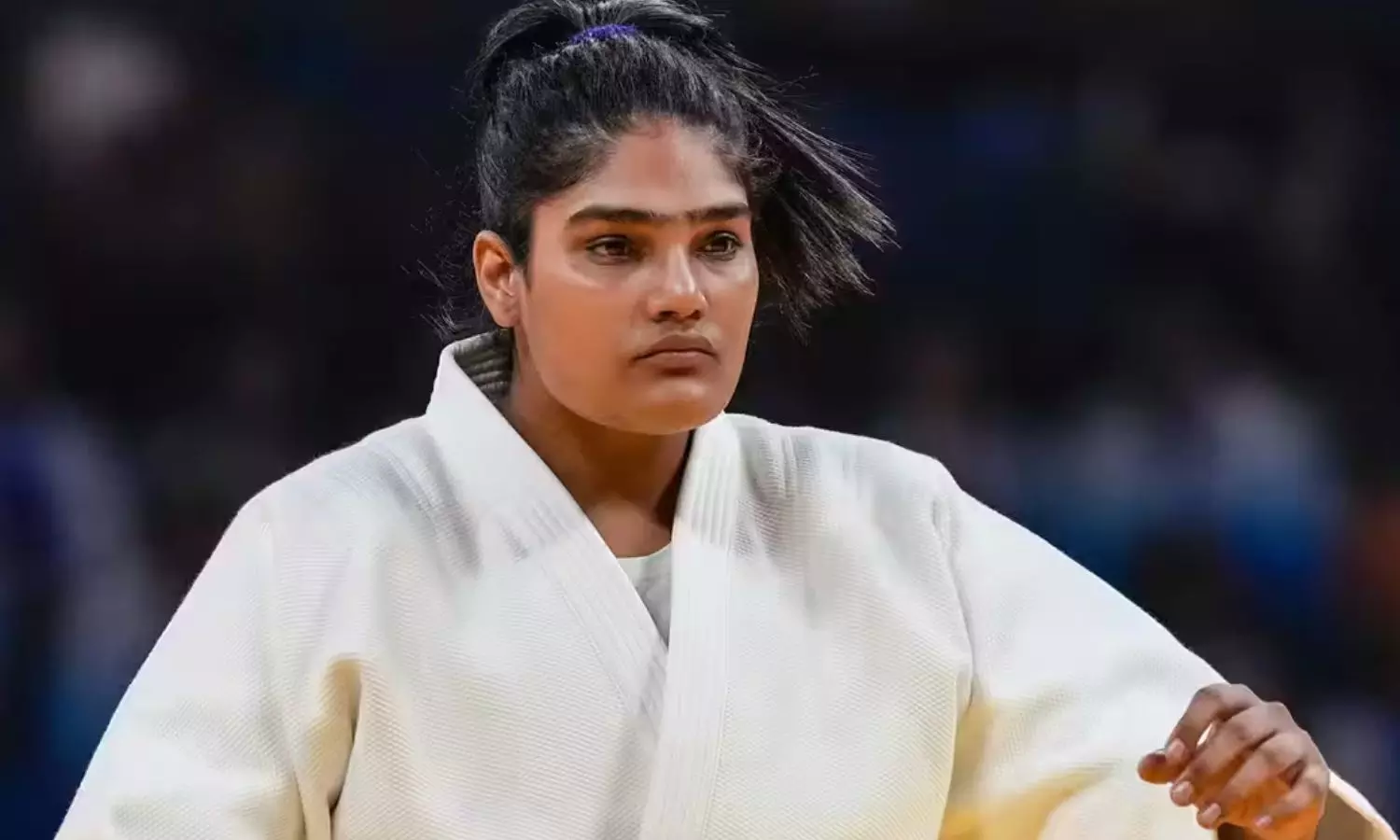
Tulika Maan (Photo credit: PTI)
Three names were struck off India's 2026 Commonwealth Games contingent in the final days before the Glasgow opening ceremony.
Judoka Arun Kumar, gone for an anabolic steroid found in an out-of-competition sample. Weightlifter Dilbag Singh, gone for a sin that wasn't his – sacrificed because his federation had fielded more athletes than its doping-depleted quota allowed. Judoka Tulika Maan, gone not for a failed test but because she couldn't be located for one too many times.
Three athletes, three mechanisms, one old story.
This is not a fresh scandal. India has had this exact conversation, only the names and paperwork changing, for at least 22 years across every major multi-sport event it sends a team to.
What should alarm the sports establishment isn't that it happened again, but how precisely it rhymes.
A two-decade pattern
At the 2004 Athens Olympics, weightlifters Pratima Kumari and Sanamacha Chanu were both caught in the dope net.
While Kumari was expelled from Olympic village after a testosterone finding before her competition, Chanu was caught for the masking diuretic furosemide after already finishing fourth.
Kumari later testified to more taking than thirty injections at a training camp in Minsk, whereas Chanu admitted to pre-competition IV drips.
The national coach Pal Singh Sandhu and a foreign expert Leonid Taranenko were sacked, and the International Weightlifting Federation suspended India's federation twice in two years.
It should have been the wake up call. But it wasn't.
Four years later, ahead of 2008 Beijing Olympics, weightlifter L. Monika Devi was stopped from boarding her flight after a pre-departure adverse analytical finding – same sport, same eleventh-hour drama.
Weightlifting has spent two decades as the discipline where the pre-departure phone call is almost a rite of passage. So, it wasn't a surprise when Dilbag Singh was recalled from Glasgow.
Delhi's home humiliation
The 2010 Commonwealth Games in New Delhi was worse for happening in India's own backyard. Eleven athletes tested positive for methylhexaneamine (MHA), then hiding in supplements under names like "geranium extract."
Shot putter Saurabh Vij and discus thrower Akash Antil were caught.
Vij, who was an expected medallist in the event, had to be withdrawn.
Wrestling lost four names from the already announced contingent. Olympian Rajiv Tomar just five days after receiving the Arjuna Award, Mausam Khatri, Sumit, and Gursharan Preet Kaur.
Swimmers Jyotsna Pansare and Richa Mishra won an appeal and competed at the Games but were banned in 2012.
The question on how 11 athletes across different sports were all exposed to the same contaminated supply chain at the same time just before a high profile multi-sporting event at home, never answered.
Asian Games, not to be left behind
Ahead of Doha 2006, discus thrower Seema Antil, who was already once stripped of a junior world title for pseudoephedrine, returned an adverse finding for stanozolol.
It is the same substance that would be found in samples of judoka Arun Kumar two decades later before the 2026 Glasgow Commonwealth Games.
The athletics federation tried to clear Seema initially but constant media pressure forced a voluntary withdrawal.
It was the preview of a dynamic that would recur again and again in the years to come – national federations reluctant to enforce their own findings until public scrutiny made inaction untenable.
Ahead of the Guangzhou 2010 Asian Games, sprinter Sathya Suresh was tested on November 14. The National Anti Doping Agency's (NADA) confirmation didn't arrive until November 23, by when he'd already flown to China and run the 4x100m heats and final before his suspension was processed.
India finished fourth, thanks to a botched baton exchange involving Suresh himself. It ironically, spared the country a live, on-podium scandal, since a bronze finish would have triggered mandatory podium testing.
The shadow of the 2011 doping scandal hung over the 2014 Incheon Asian Games. Six members of India's women's 4x400m relay, including Ashwini Akkunji, Mandeep Kaur, Sini Jose, Priyanka Panwar, Juana Murmu, and Tiana Mary Thomas were tested positive for methandienone.
Coach Yuri Ogorodnik was sacked; NADA gave lenient one-year bans to let them return for London 2012, but the IAAF and WADA appealed to CAS, which doubled the bans and ended any hope of London.
It was an early template of lenient Indian panels being overruled internationally.
Commonwealth Games, Twelve Years On
By Birmingham 2022, the chemistry had modernised but the timing hadn't moved. Sprinter S. Dhanalakshmi was disqualified by the Athletics Integrity Unit in the final days before departure.
Triple jumper Aishwarya Babu was pulled by NADA after months of implausible personal-best jumps – an open secret in the athletics fraternity – and received a four-year ban.
Birmingham 2022 was, in effect, a dress rehearsal for Glasgow 2026.
Para-Sport's overlooked chapter
India's para-sport doping record gets the least scrutiny but carries damage just as severe.
Ahead of the 2022 Asian Para Games (held October 2023), F55 thrower Neeraj Yadav was tested six days before departure, travelled anyway, and won two gold medals before a delayed NADA analysis returned positive for stanozolol, threatening retroactive annulment of his results from the continental competition.
He received a four-year ban from November 2023.
More sobering still is the story of Sudhir, who won India's first-ever Commonwealth Games gold in para-powerlifting at Birmingham 2022, later tested positive for morphine.
His results were disqualified and the IPC banned him two years, ruling him out of Paris 2024. The gold medal was stripped off as well for India.
He returned to compete at Glasgow 2026 in men's heavyweight para-powerlifting, the same event where Jhandu Kumar won bronze.
The unforgettable Rio Olympics scandal
The 2016 Olympics cycle turned India's doping story from being about athletes into one about institutional credibility.
Sprinter Dharambir Singh and shot putter Inderjeet Singh were stopped pre-departure.
Inderjeet's case exposed the national lab itself, whose "A" sample reports contradicted each other weeks apart.
Wrestler Narsingh Yadav, who tested positive for methandienone and claimed sabotage by a rival and two-time Olympic medallist was believed largely by many insiders was cleared by India's own doping panel. He was allowed to travel to the Rio de Janeiro Olympics
The World Anti Doping Agency (WADA) appealed the decision, prompting Court of Arbitration of Sport (CAS) to convene an emergency hearing in Rio and expel him from the village hours after his weigh-in.
That a national body could clear an athlete whom an international tribunal would reverse within days, on the same evidence, speaks volumes about how much faith to place in domestic adjudication standards.
Has Anything Changed?
What's changed since Athens 2004, is merely only the vocabulary. Tulika Maan's exclusion wasn't a failed test but a whereabouts violation.
WADA's "Operation Carousel" found 97 such failures among 70 elite Indian athletes between late 2022 and July 2023, placing India alongside Russia and Italy among the most frequent offenders on this metric.
That is not a story about performance enhancing drugs anymore. It is a story about a supposedly elite sporting culture that still hasn't taught its best athletes – many from rural, agrarian backgrounds without professional management teams – how to monitor a location-tracking app and how to comply with a system built for a very different kind of athlete.
The pressure has also shifted onto federations. Between June 2025 and July 2026, Indian weightlifting recorded five confirmed positives, and its Commonwealth Games quota was slashed from 16 to 11 as a direct consequence.
It is forcing federations to internalise a cost once externalised entirely onto the athlete.
It's a smarter deterrent, but one that makes a clean athlete like Dilbag Singh pay for his colleagues' failures.
The real indictment
The government's current response is to talk of criminalising the supply chain. They want to chase coaches, pharmacists, and suppliers, not just the athlete.
It is the right instinct, but perhaps two decades late. Nearly every structural fix that might have prevented Glasgow's three withdrawals already existed on paper.
The National Anti-Doping Act of 2022 gave NADA statutory teeth and independent disciplinary panels.
The FSSAI-NFSU-NADA tie-up, formalised through the Centre of Excellence in Nutritional Supplement Testing for Sportsperson, was meant to kill the "contaminated supplement" defence invoked from 2011 through Tokyo's Kamalpreet Kaur.
And the National Dope Testing Laboratory's 2021 reaccreditation was meant to end the delays that let Neeraj Yadav compete and medal in Hangzhou before his positive was confirmed.
None of it stopped three more names from being pulled off the Glasgow roster in the final week.
Tulika's third whereabouts faliure happened back in April, but only acted on as she was set to fly out.
The bitter truth Indian sport still won't sit with is that pre-competition interdiction is not by itself a sign the system is failing. In a narrow sense, it is the system working by catching what it's designed to catch, before the world is watching a live disqualification.
But it keeps working late, and far too often – from Doha to Guangzhou to Delhi to Rio to Birmingham to Hangzhou to Glasgow.
Two decades of interdictions is not evidence of vigilance. It is, instead, evidence that the culture producing these athletes has never caught up with the science meant to police it.
Until that changes, every Games will have its own Arun Kumar, Tulika Maan, and Dilbag Singh.