
Chess
Explained: What is Total World Chess Championship?
The Total Chess World Championship Tour aims to crown the best players across three formats.
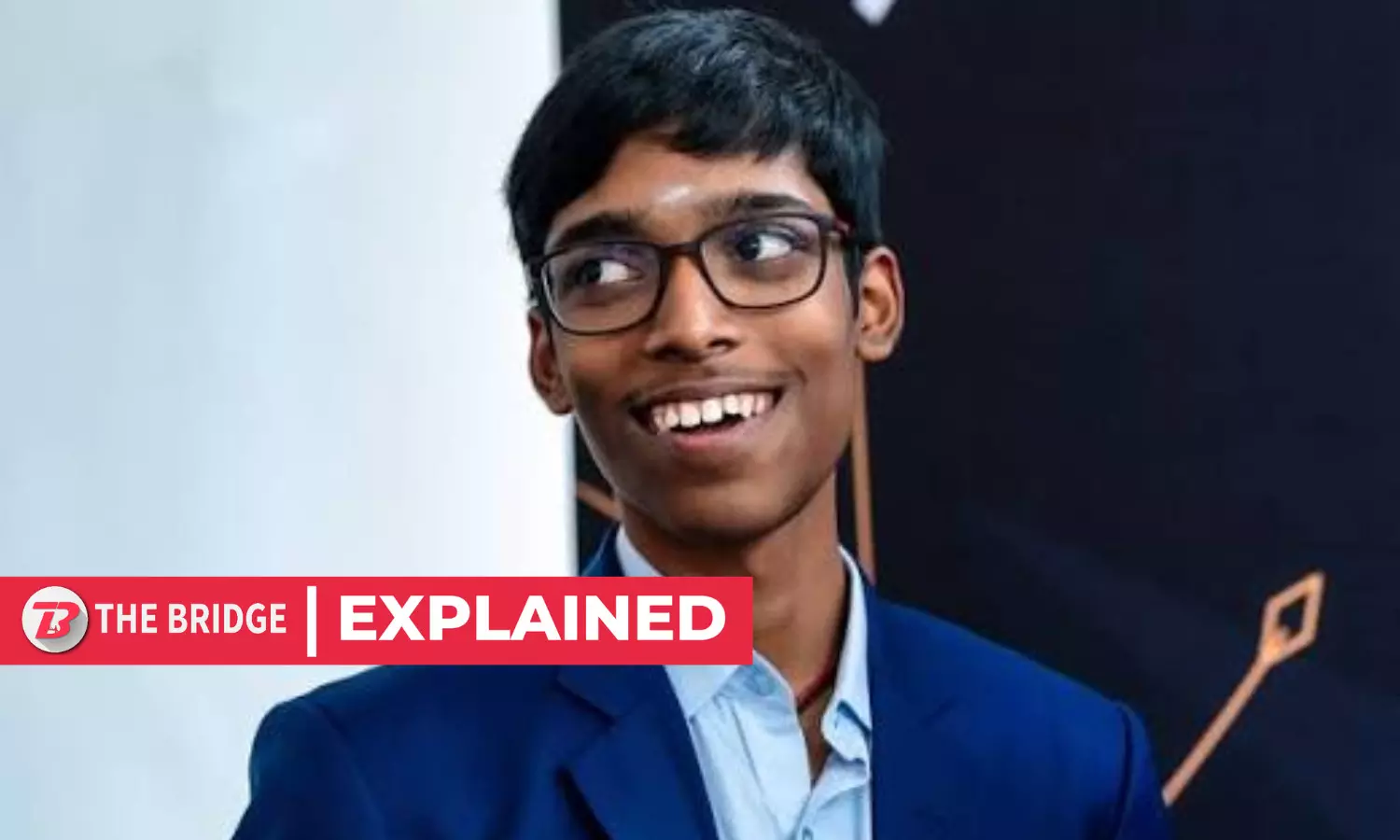
R Praggnanandhaa (Photo credit: FIDE)
Chess has traditionally asked who plays best in one format. The Total Chess World Championship Tour, created by the team behind Norway Chess and approved by FIDE, asks who plays best at all of them.
The pilot event of the Total World Chess Championship began in Budapest on Tuesday and runs until November 20.
Magnus Carlsen leads a 24-player field in which also includes India's R Praggnanandhaa and Arjun Erigaisi, and women’s candidates winner Vaishali Rameshbabu alongside them.
The prize fund is $650,000.
The concept
Total Chess borrows from multi-event sport. Viswanathan Anand has compared it to a triathlon, and the logic is similar that the players must show range.
From March 2027 the full Tour will crown a FIDE World Combined Champion. Budapest awards no such title. This edition has no Grand Final and exists to test the rules, so its winner is simply the pilot champion.
Carlsen’s presence explains much of the interest. He gave up the classical crown after four successful defences, tired of months of opening preparation and long matches.
A format that rewards adaptability over theoretical homework suits him, and it brings the game’s biggest name back into a FIDE-recognised title race.
The three time controls
The Total World Chess Championship will consist of three formats.
Fast Classic gives each player 45 minutes plus 30 seconds per move. Rapid gives 15 minutes plus 10 seconds. Blitz gives three minutes plus two seconds.
Fast Classic sits well below traditional classical chess in duration, though it still leaves room for deep calculation.
How the pilot works
The event opens with a nine-round blitz Swiss involving all 24 players. Its standings serve as tiebreakers later, so the tournament effectively begins before the group stage does.
The players are then drawn into four groups of six, with the top four by rating kept apart. Each group plays a double round-robin, meaning ten Fast Classic games per player across five days.
A win earns three points, a draw one and a loss nothing. The scoring is designed to make short draws unattractive.
After a rest day, players enter knockout brackets according to their group finish. Each match lasts two days, and each day contains four blitz games, two rapid games and one Fast Classic game. The results are weighted heavily towards slower chess.
A blitz win is worth one point, a rapid win four and a Fast Classic win eight, with draws earning half.
The single Fast Classic game therefore carries as much weight as both rapid games together and twice as much as all four blitz games. Scores reset each day.
If a match is level after two days, an Armageddon game decides it. White gets 10 minutes and black pieces gets seven, with draw odds for black.
A one-second increment starts at move 41. The player with the higher combined score over the two days chooses colour first, and if the scores are level, the players bid for the privilege.
What comes next
From 2027, the Tour plans three 24-player events in different cities. Group and knockout results earn Tour points, with the winner of the strongest bracket collecting 30, and bonuses reward players who win more than one event.
The top four then reach a Grand Final. First meets fourth and second meets third in the semifinals, and the final runs across four days in two sets using the same mix of time controls. A 1-1 split in sets goes to blitz and, if needed, Armageddon. The announced minimum prize pool is $2.7 million per season.
FIDE has also said the Tour will form part of the qualification pathway for the Candidates Tournament, which gives the project a link to the classical title.
Where it sits in the sport
The pilot of Total World Chess Chess runs alongside the classical championship. World Champion Gukesh D and challenger Javokhir Sindarov qualified for invitations but skipped Budapest because their title match in Geneva follows immediately. Hikaru Nakamura is also missing from the field.
The commercial ambition is plain. Manchester City’s Erling Haaland and Winter Olympian Johannes Høsflot Klæbo are among the investors, and the organisers speak openly of drawing on Formula 1’s model.