
Athletics
Commonwealth Games 2026: Neeraj Chopra and the burden of greatness
Indian javelin is no longer a one-man story, emergence of athletes like Rohit Yadav and now Yashvir Singh may ultimately become one of Neeraj Chopra's greatest legacies.
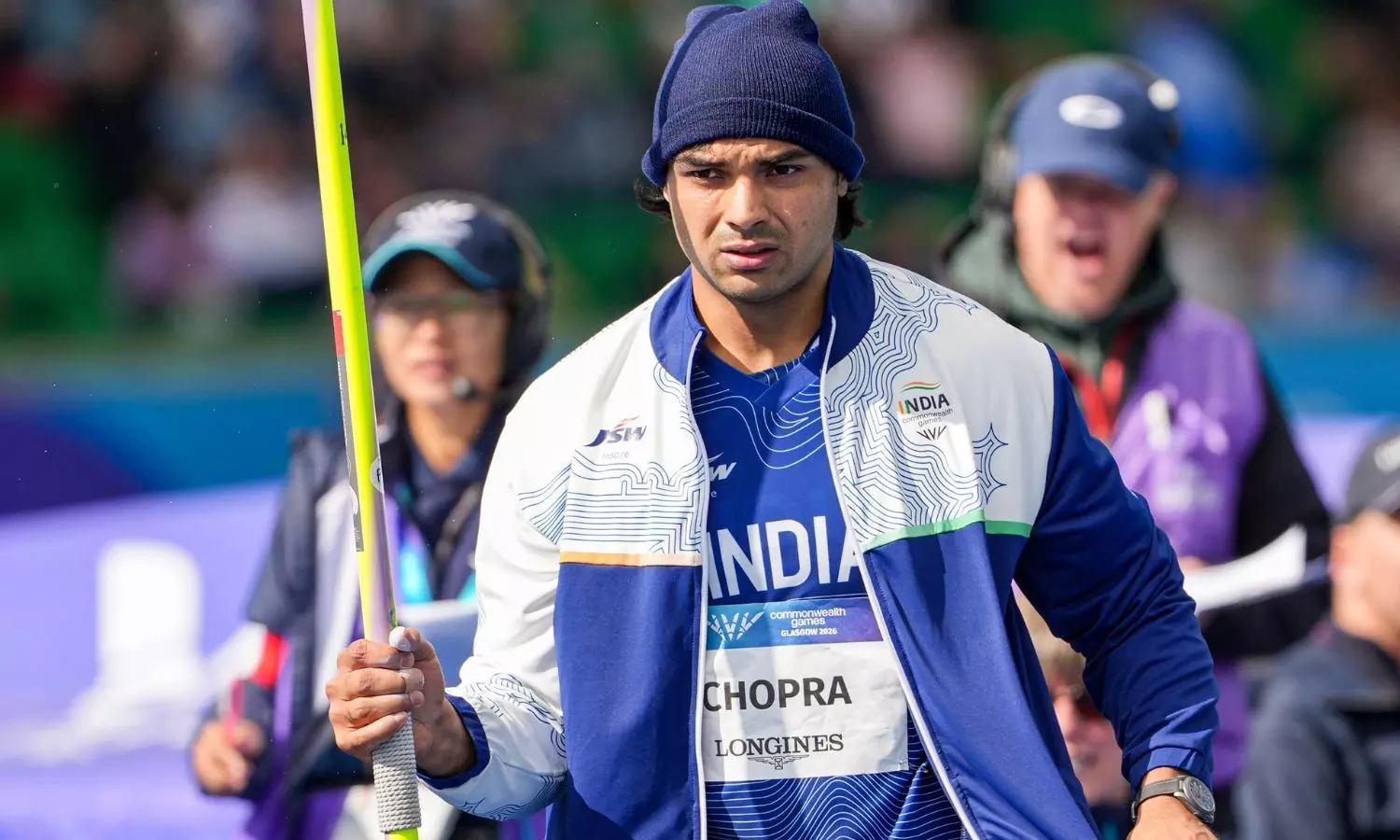
Neeraj Chopra (Photo credit: PTI)
There is an old saying in sport: the hardest thing is not reaching the top, but staying there.
Few Indian athletes understand that better than Neeraj Chopra. On Friday night in Glasgow, Chopra produced a best throw of 85.83m to win a silver medal at the Commonwealth Games.
It was another podium finish at a major international championship, another medal for India, and another reminder that, even after nearly a decade at the highest level, he remains among the world's elite.
Yet, almost immediately, the conversation shifted elsewhere. Why wasn't it gold?
It is a question that says less about Neeraj Chopra's performance than it does about the extraordinary expectations he now carries every time he steps onto a runway.
It’s almost as if we’ve stopped watching Neeraj compete against other athletes. We’re watching him compete against an idealised version of Neeraj Chopra that we’ve constructed over the last decade.
Paradox of greatness
Silver has somehow become an underachievement. That is the paradox of greatness. The better an athlete becomes, the narrower the definition of success grows.
His excellence has become so routine that people notice the tiny deviations from it more than the excellence itself.
An Olympic champion is no longer expected to compete; he is expected to win. If he does win, the margin matters. If he throws 85 metres, people ask why it wasn't 90.
No other Indian athlete lives under quite the same microscope. The contrast was evident in the very same competition.
Yashvir Singh's bronze medal was deservedly celebrated. His final-round throw of 85.41m, a personal best and his first international medal, was one of the stories of the evening. It should have been.
At the same time, Neeraj's silver prompted discussions about missed opportunities rather than appreciation for another podium finish.
That difference in perception is entirely of Neeraj's own making.
His Olympic gold in Tokyo changed Indian athletics forever. It elevated javelin from an event largely followed by athletics enthusiasts to one that millions watched with genuine anticipation.
More importantly, it changed the benchmark for Indian sport. Winning medals was no longer enough. Winning gold became the standard.
But somewhere along the way, another reality has been overlooked.
The rest of the world has improved too. Men's javelin is no longer defined by one or two dominant names. The event has become deeper, more competitive and increasingly unpredictable.
New athletes continue to emerge every season, and countries that were rarely discussed in conversations around global javelin are now producing genuine contenders.
Rumesh Pathirage's victory in Glasgow was not an upset born out of one exceptional night. The Sri Lankan has been among the world's best throwers this season, arriving at the Commonwealth Games as the year's leading performer. His winning throw of 89.75m was another reminder that international javelin has entered an era where multiple athletes are capable of producing world-class performances.
That is precisely what elite sport demands. Athletes evolve, rivals improve, new challengers emerge. Dominance, no matter how sustained, is never permanent.
Yet discussions around Neeraj often ignore that broader context.
Every competition is framed as though he is racing against his own legacy rather than against a field that is getting stronger every year.
It is an impossible comparison to sustain.
At 85.83m, Chopra remained comfortably among the world's best. On another day, that throw could have won gold. On this occasion, someone else was better.
There should be nothing unusual about that.
What perhaps deserves greater appreciation is the consistency with which Chopra remains relevant at the highest level.
Olympic champion, world champion, Diamond League winner, Asian champion, Commonwealth Games champion and now Commonwealth Games silver medallist, his medal collection spans years in a sport where careers are often defined by fleeting peaks.
Consistency, however, rarely generates headlines. Expectation does.
Perhaps that is the price Neeraj Chopra will continue to pay for changing Indian sport forever.
He has raised the bar so high that a silver medal at the Commonwealth Games — a result that would define the career of almost any other Indian athlete — is viewed as a disappointment.
That is not a reflection of decline. It is the consequence of excellence becoming so routine that people forget just how difficult it is to remain among the very best in the world.
Chopra's influence, however, extends far beyond the medals he has won.
His Olympic triumph transformed javelin from a niche discipline into one of the country's most closely followed athletics events.
Youngsters now take up the sport with the belief that international success is attainable, and India's growing depth in men's javelin is perhaps the biggest testament to that impact.
The emergence of athletes like Rohit Yadav and now Yashvir Singh, who joined Neeraj on the Commonwealth Games podium with a career-best throw, speaks not just to individual talent, but also to the culture of excellence that Chopra has helped create.
Indian javelin is no longer a one-man story, and that may ultimately be one of Neeraj's greatest legacies.