
Athletics
India’s sprint revolution: The system behind Gurindervir Singh’s historic 10.09s
Gurindervir Singh and Animesh Kujur’s record-breaking runs in Ranchi reflected a larger transformation underway in Indian sprinting.
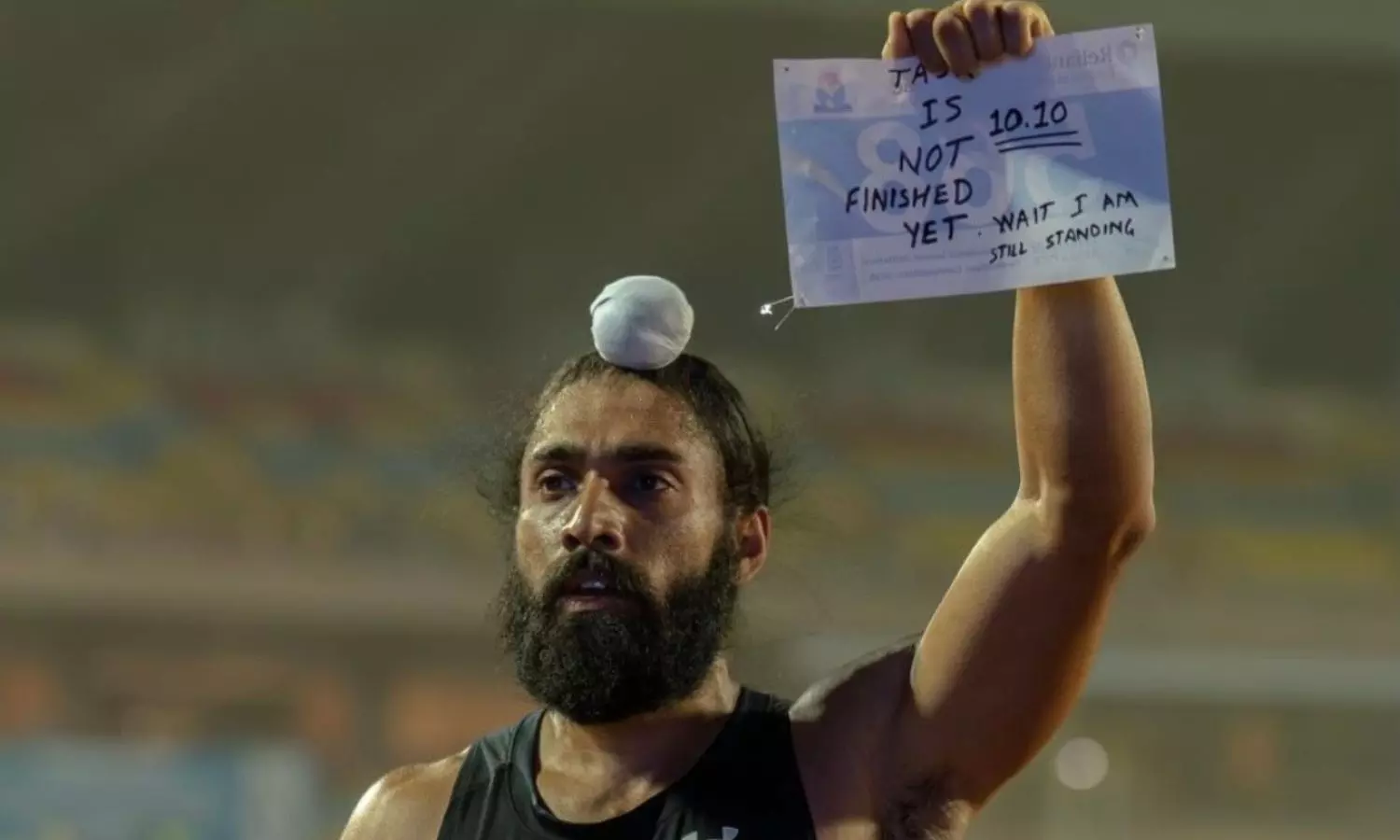
Gurindervir Singh (Photo credit: Reliance Foundation Youth Sports)
For years, Indian men’s sprinting moved in painfully small increments.
Between 2005 and 2020, the national record in the men’s 100m was broken only twice. Anil Kumar Prakash clocked 10.30 seconds in 2005 before Amiya Kumar Mallick lowered it to 10.26 in 2016. Those numbers stood not just as records, but as reminders of how difficult it was for Indian sprinting to evolve at the elite level.
But over the last year, Indian sprinting has accelerated at a pace the sport in the country had never experienced before.
And nowhere was that transformation more visible than at the Federation Cup in Ranchi.
Within the span of a few hours, the national record changed hands three times. Gurindervir Singh first ran 10.17 seconds in the semifinals before Animesh Kujur responded almost immediately with 10.15. Then, in the final, Gurindervir returned to produce the race that changed Indian sprinting forever, 10.09 seconds, the first time an Indian man had broken the 10.10 barrier.
The progression itself tells the story.
From 10.30 to 10.20, Indian sprinting took nearly two decades. From 10.20 to 10.10, it took barely a year.
What unfolded in Ranchi was not a one-off performance from a single athlete. It was the clearest evidence yet of a larger shift taking place inside Indian athletics, one driven by professional coaching structures, sports science, elite training groups and a generation of sprinters beginning to believe they belong at a completely different level.
“We’ve been talking about this for many years,” coach James Hillier said in a media interaction arranged by Reliance Foundation. “It has been many years of work to get to this point. We’re now really seeing the results of six years of working tirelessly behind the scenes.”
The rise of the sprint cluster
For decades, Indian sprinters mostly trained in isolation.
Different states. Different coaches. Different facilities. Different standards.
Elite sprint nations, however, rarely work that way. Jamaica had MVP Track Club. The United States had deep NCAA ecosystems and professional groups. Britain built relay pools that trained together constantly.
India never really had that environment. Now it does.
At the Reliance Foundation Youth Sports setup, Hillier has assembled what may be the deepest sprint group Indian athletics has ever seen: Gurindervir Singh, Animesh Kujur, Amlan Borgohain, and Manikanta Hoblidhar.
The athletes train together. Push each other daily. Compete constantly.
And most importantly, they believe the other person’s success helps their own.
“When Animesh broke the national record, I was very happy,” Gurindervir said. “Happy and motivated that I have to improve myself more.”
That reaction surprised many watching from outside. For years, Indian athletics often functioned through guarded rivalries and fragmented training systems.
But this group behaves differently.
“One of the things that I say to all of them is you need your training partners to be better to improve you also,” Hillier explained.
The coach calls them “a cluster of very talented athletes.”
And while they share rooms, meals and recovery sessions together, the atmosphere changes the moment spikes hit the track.
“They’re very good friends,” Hillier said. “But at the same time, when they’re on the track, they want to kill each other.”
That internal competition may be the biggest reason Indian sprinting suddenly looks transformed.
Rebuilding Gurindervir Singh
If Ranchi announced a new era, Gurindervir became its face.
But the road to 10.09 seconds began far away from elite sprint laboratories.
Born in Punjab to a farmer’s family, Gurindervir spent years training on worn-out tracks with limited support.
“Our track in Punjab was very bad,” he recalled. “I didn’t have any good dietitian, no physio, no good gym.”
There were health scares too. A severe stomach issue disrupted his progress for nearly one-and-a-half years.
“I got very sick,” he said. “It took one and a half year to recover.” Yet even during those difficult phases, one thought stayed constant.
He wanted to train with the country’s fastest men.
“Whenever I meet Amlan, I always ask, bro, I want to train with you,” Gurindervir said. “Whenever I meet Mani (Manikanta), I always said I want to train with you.”
Eventually, he messaged Hillier directly asking to join the Reliance setup.
That decision changed everything.
“When I joined Reliance, everything changed,” Gurindervir said. “Good dietitian, good physio, good training, good facility.”
But Hillier quickly realised the transformation required more than better facilities.
“When he first joined Reliance, I wasn’t happy with how he was running,” Hillier admitted.
The coach believed Gurindervir relied too much on brute strength instead of efficient sprint mechanics.
“He was muscling his way down the track,” Hillier said. “He could run a good 60 or 70 metres, but he couldn’t really finish the race.”
So he rebuilt him. Body composition. Running posture. Reactive strength. Tendon efficiency. Sprint phases. Everything became deliberate.
“We worked step by step,” Gurindervir explained. “First four steps, then first 30 metre, then 50 metres.”
The goal was not simply to run fast early in the race, but to sustain speed through the finish.
Hillier compared the change to unlocking hidden energy systems inside the athlete’s body.
“The tendons store energy much more efficiently than muscle,” he explained. That shift forced Gurindervir to sacrifice short-term results for long-term gains.
“In training, sometimes the guys have been running faster than him,” Hillier revealed. “But he’s been so secure in himself because he knows exactly what he’s working on.”
Even when he lost races earlier in the season, the coach remained calm.
“We were both delighted with that run,” Hillier said about one such race in Delhi. “Nobody cares about what happened in the Indian Athletics Series in Delhi. What people care about is national championships and breaking records.”
In Ranchi, the process finally exploded into public view.
Changing the Indian sprint mindset
Perhaps the biggest transformation is not physical at all. It is mental.
For decades, Indian sprinting carried invisible limitations, the belief that Indians simply could not sprint with the world’s best.
Hillier has tried to erase that thinking entirely.
“We don’t talk about sub-10,” he said. “We talk about 9.98. What is the profile of a 9.98 athlete?”
That distinction matters. The target is no longer symbolic. It is scientific. Reaction times. Force production. race modelling. Recovery metrics. Competitive psychology.
Everything is now built around world-class standards. And the athletes are beginning to think that way too.
Before races, Gurindervir imagines himself entering battle.
“I think of my culture and my warriors,” he said. “I think I’m in a war and I’m going to kill everyone.”
Off the track, however, he describes himself differently. “In life, I’m very cool,” he laughed. “But when I’m on track, I’m a different person.”
That edge has been sharpened through adversity, too. Last year, Gurindervir admitted that harsh comments about his appearance affected him deeply.
“I stopped looking into my own eyes,” he revealed.
Hillier helped him rebuild mentally through psychology sessions and difficult conversations.
“Coach told me that anybody can say anything to disturb you,” Gurindervir said. “Only on the starting line, you have to motivate yourself.”
The unfinished revolution
The remarkable thing about Ranchi is that nobody inside the group believes this is the peak.
Hillier insists there is still “a huge amount left to come out of Guri.
Animesh Kujur still has room to improve technically. Manikanta is recovering from an injury. Amlan brings experience and relay depth. Younger sprinters continue emerging.
“I’ve set the target to get four guys under 10.2 this year,” Hillier revealed.
A statement like that would have sounded ridiculous in Indian sprinting a few years ago.
For years, Indian athletics waited for one exceptional sprinter to appear.
Instead, it may have built an entire generation.