
Asian Games
Asian Games 2026: Kurash player Pincky Balhara signs off with bronze
This is Pincky's second Asian Games medal, having won a silver in the women's 52kg category in 2018 Jakarta Games.
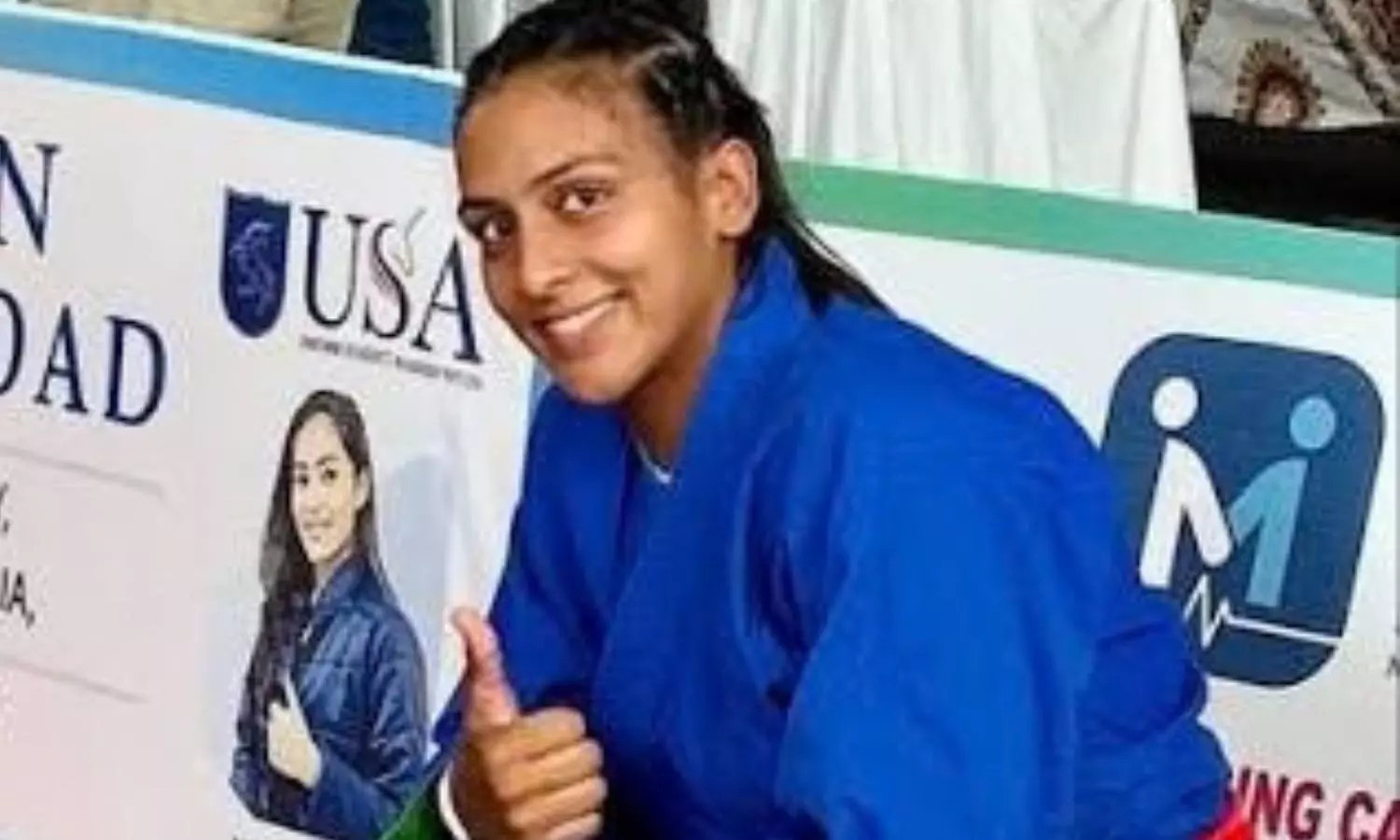
Pincky lost to South Korea's Sumin Mo 0-5 in the semifinals of the women's 78kg event.
Pincky Balhara became the first Indian to win two medals in Kurash at the Asian Games after clinching a bronze in Nagoya on Monday. Pincky lost to South Korea's Sumin Mo 0-5 in the semifinals of the women's 78kg event.
Delhi girl Balhara copped a Dakki (penalty) during the bout while Mo earned 'Yonbosh' point.
It is Balhara's second Asian Games medal, having won a silver in the women's 52kg category at the Jakarta Games in 2018 when this sports discipline made its debut at the continental showpiece.
Malaprabha Jadhav also won a bronze in the 2018 Asian Games.
Earlier, Balhara prevailed 3-0 over Garam Lim in the quarterfinals. The 27-year-old Indian produced the decisive score through a 'Chala', while Lim could not register a point across the bout.
'Chala' is awarded when an athlete throws the opponent but the move lacks full control.
Balhara, who got a bye in the pre-quarterfinals, said she was battling keen pain after being hit by her opponent in the quarterfinal.
“I got injured in the quarterfinal match, got hit on the knee. My opponent in the quarterfinal was also a Korean. So, my semifinal opponent knew that I got injured on my right knee.
"I was attacking but she was hitting me there (on her knee) again and again. So, I lost on penalty," said a sobbing Balhara from Neb Sarai in Delhi.
“This is only my second bout in 78kg and before that I competed in the Asian Championships in Uzbekistan in May. That was my first in 78kg.”
Balahara trains at Baba Ganga Nath Judo and Kurash Academy at Munirka in Delhi, run by his maternal uncle Samundar Tokas, a well known judo and kurash coach. She started with judo at the age of nine.
Kurash is a traditional martial art form with ancient roots in Central Asia, particularly Uzbekistan. It is played by two athletes, one wearing a green jacket and the other a blue jacket. The objective is to try to throw one another to the ground.
If thrown to the back, victory is declared.
If thrown onto the side, points are awarded.
If thrown to the belly or onto the side, a lower score is given.
The one with the most points wins. Ground techniques, chokeholds, and joint locks are prohibited. Victory is determined solely by standing throws.
(Except for the headline, this story has not been edited by The Bridge Desk. It is published from a syndicated feed)