
Asian Games
Asian Games 2026: Why were five Indian tennis players left out of the squad?
The Sports Ministry's 'excellence-first' policy has triggered a debate over India's tennis squad for the Asian Games.
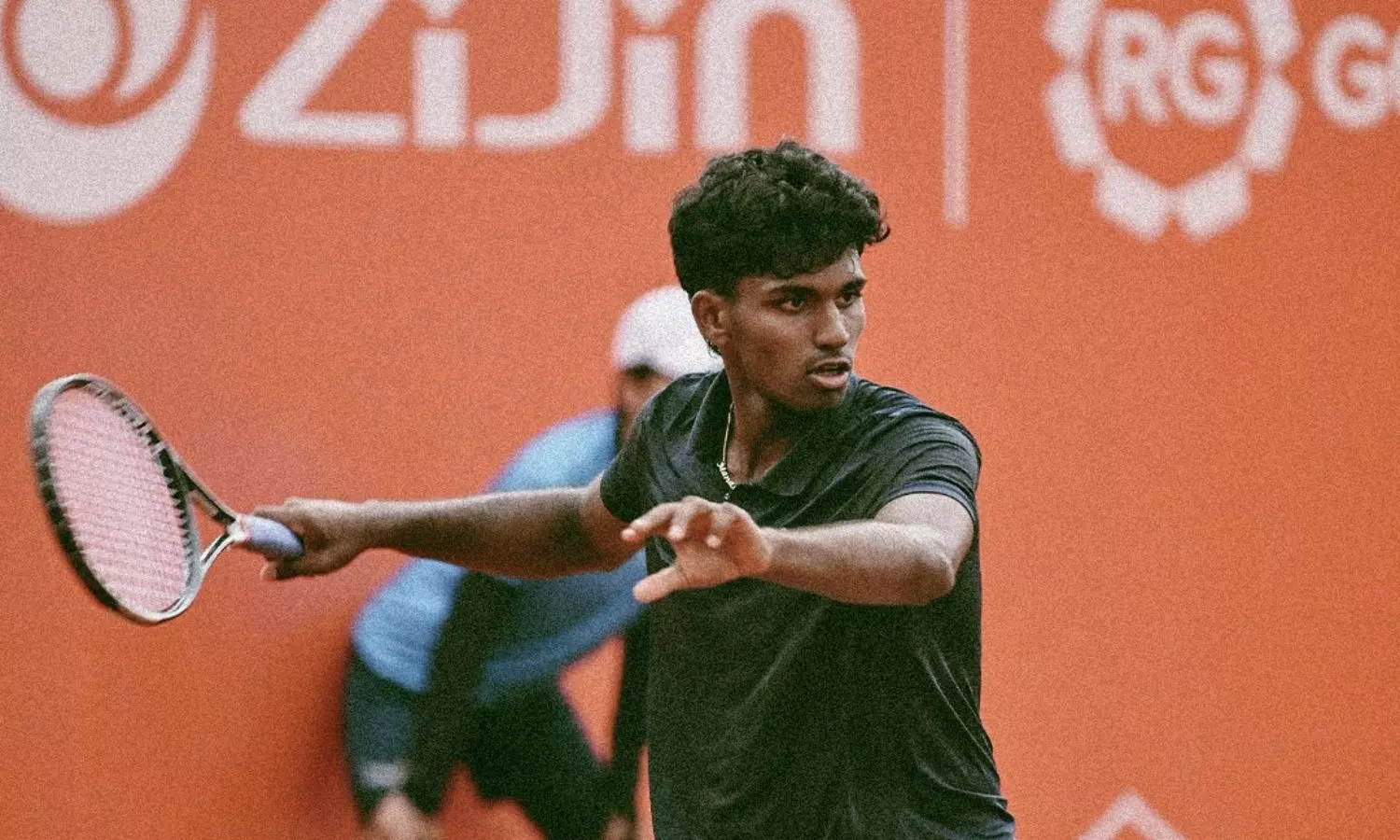
Manas Dhamne (Photo credit: ATP Challenger)
As the 2026 Asian Games in Aichi-Nagoya, Japan, get closer, the Ministry of Youth Affairs and Sports released India's squad for the 2026 Games. The final contingent has 492 athletes across 35 disciplines, but the tennis squad soon became the centre of attention.
The All India Tennis Association (AITA) had proposed a 12 member tennis team. However, the final squad was reduced to seven players. The five players who were left out are Manas Dhamne, Sahaja Yamalapalli, Vaishnavi Adkar, Vaidehee Chaudhari and Prarthana Thombare.
The decision led to questions about why the five players were not included and whether the government's selection rules were being applied too strictly.
Why were the five tennis players excluded?
The main reason was the Sports Ministry's selection criteria for multi-sport events such as the Asian Games.
Under the government's rules, singles players had to rank among the top six in Asia, while doubles players had to rank among the top eight in Asia, based on a rolling 12 month evaluation window. The policy was designed to select athletes considered to have a realistic chance of winning a medal rather than sending players simply for participation or exposure.
The five omitted players did not meet these continental ranking benchmarks. Sahaja Yamalapalli was ranked 342 in the world, with a career-high of 284, while Vaishnavi Adkar was ranked 389, with a career-high of 374. In men's singles, Manas Dhamne had a career-high ranking of 362. Vaidehee Chaudhari was ranked 426 in women's doubles, while Prarthana Thombare was ranked 267.
What did AITA say?
AITA has challenged the decision and said it fought for the five players who were left out. The tennis body said it made an "unequivocal representation" to the Indian Olympic Association CEO Raghuram Iyer and sought a review of their non-selection.
AITA has also rejected the claim that the five players were simply absent from its recommendations.
AITA's argument is that the young players could benefit from competing at a major multi-sport event. A source within AITA said the players were being prepared for future major events, including the 2030, 2032 and 2036 cycles, and that the Asian Games could provide valuable exposure.
The selection row also drew criticism from two-time Asian Games gold medallist Rohan Bopanna. Bopanna questioned the idea of deciding selections only through rankings and statistics.
He argued that players should get the opportunity to compete and prove themselves on the court rather than having their chances decided before the tournament.
His comments added another layer to the debate, with questions being raised about whether major multi-sport events should also be used to give young players international experience.
What does the Sports Ministry say?
As per sources from the Sports Ministry, the five players did not meet the prescribed continental performance criteria for the Asian Games. The Ministry said it received seven tennis players in the final list shared by the IOA. Under the selection policy, singles players must be among the top six in Asia, while doubles players must be within the top eight during the 12-month evaluation period.
The Ministry also highlighted the gap between these benchmarks and the rankings of the leading Asian players. The sixth-ranked Asian player in men's singles was World No. 120, while the sixth-ranked Asian player in women's singles was World No. 72.
In women's doubles, the eighth-ranked Asian player was World No. 30, whereas Vaidehee and Prarthana were ranked significantly lower. The Ministry further noted that the two had never played together as a pair on the WTA or WTT tour.
SAI has also defended the selection criteria. According to an SAI source, the five omitted players did not meet the required international ranking standards and were not part of the final shortlist received by the Ministry.
AITA, however, has disputed this account, saying it had pushed for the players to be included.
The Ministry has maintained that the policy must be applied consistently across sports. It argues that allowing exceptions for athletes who fall outside the prescribed Asian rankings in one discipline could affect the selection process in other sports.
The government has therefore described its approach as an "excellence-first" policy focused on athletes with realistic medal prospects.
The same approach has affected selections in sports such as judo and rowing. The broader framework sets different benchmarks depending on the nature of the sport.
In measurable individual sports such as athletics, swimming and weightlifting, athletes must have matched or bettered the sixth-place performance from the previous Asian Games at a recognised international competition during the 12 months before the Games.
For non-measurable individual sports such as wrestling, boxing and martial arts, athletes must have achieved a top-six finish at the latest Senior Asian Championships or rank among the top six Asian athletes.
In team sports such as hockey, teams must have finished in the top eight at the latest Senior Asian Championships or hold a top-eight ranking among Asian nations.
The government has said these criteria are intended to create a more focused Asian Games contingent made up primarily of athletes with a realistic chance of winning medals.
The tennis controversy, therefore, reflects a larger debate over how India should approach selection for major multi-sport events.
AITA and Bopanna have argued that young players should be given opportunities to compete at major international events, gain experience and prepare for future competitions.
The Sports Ministry, on the other hand, has defended a system based on rankings, recent performances and medal potential. It believes maintaining the same standards across more than 40 sporting disciplines is important to ensure consistency in selection.
At the heart of the debate are two different approaches whether the Asian Games should primarily feature India's strongest medal contenders, or whether they should also serve as a platform for promising athletes to gain experience and develop into future stars.