
Asian Games
Asian Games 2026: Haryana produces nearly one in four Indian medallists; rest lag behind
A total of 207 athletes combined to win 85 medals for India at 2026 Asian Games.
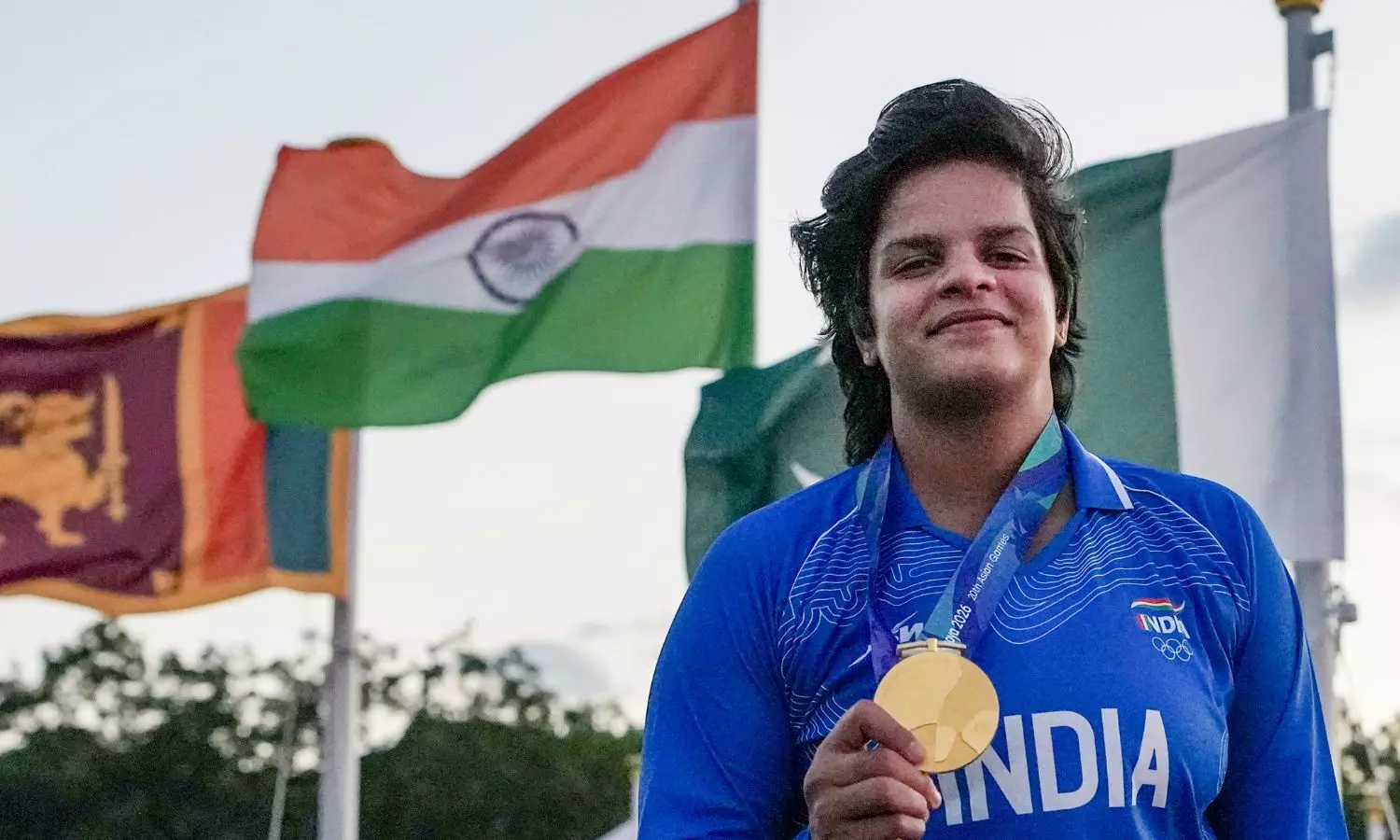
Shafali Verma with her 2026 Asian Games medal (Photo credit: PTI)
Out of the 207 Indian athletes, who returned from the 2026 Asian Games with a medal, 45 hail from Haryana. That is 21.7% of India's entire medal-winning contingent from a state that holds just over two percent of the country's population.
The data compiled by The Bridge, which maps every medallist to a home state, shows how lopsided Indian sport remains, and where the gaps are beginning to close.
A top-heavy table
Maharashtra is second in the standings with 22 athletes, less than half of Haryana's count. Punjab follows with 21.
Those three states account for 88 medallists, or 42.5% of the squad. Add Tamil Nadu (14) and Uttar Pradesh (13) and the five-state share rises to 115, or 55.6%.
Meanwhile, athletes from 24 states and union territories out of the 36 won medals for India in Aichi-Nagoya. The rest produced none.
Haryana's gold habit
When you count only the gold medals, the gap widens. A total of 114 Indian athletes – including each member in team events – returned home with a gold medal.
Haryana contributed 36 of the gold medal winning athletes, nearly 32% of the total..
Four in every five Haryana medallists stood on the top step. Punjab converted 13 of its 21 into gold, while Maharashtra converted 12 of 22 to the yellow metal.
| States | Total Medallists |
| Haryana | 45 |
| Assam | 2 |
| Maharashtra | 22 |
| Karnataka | 8 |
| Telangana | 6 |
| Andhra Pradesh | 6 |
| West Bengal | 3 |
| Uttar Pradesh | 13 |
| Tamil Nadu | 14 |
| Gujarat | 4 |
| Kerala | 8 |
| Manipur | 8 |
| Punjab | 21 |
| Himachal Pradesh | 7 |
| Madhya Pradesh | 9 |
| Delhi | 9 |
| Rajasthan | 5 |
| Chandigarh | 2 |
| Chhatisgrah | 2 |
| Uttarakhand | 2 |
| Bihar | 2 |
| Jharkhand | 4 |
| Odisha | 3 |
| Mizoram | 2 |
Team events explain a good deal of this. Hockey and kabaddi squads carry many names from Haryana and Punjab, and every member of a gold-winning squad counts as a medallist.
The same applies to cricket, where the men's and women's teams both returned with gold.
Wrestling and boxing add individual strength to Haryana's tally, with Aman Sehrawat, Parveen Hooda and Ankush Pangal among the names.
The south wins medals but struggles to win gold
The five southern states of Tamil Nadu, Karnataka, Kerala, Telangana and Andhra Pradesh, together produced 42 medallists, three fewer than Haryana alone.
Their medal colour is telling. Tamil Nadu has 14 medallists, and only three of them won gold, while nine took bronze.
Kerala's eight include six silver medallists and a single gold, that one from Sanju Samson in the cricket squad.
Telangana and Karnataka fare better at the top step, with four gold medals each.
This pattern fits sports like badminton, squash and athletics field events, where India reaches the podium often but the finals are harder to win.
It also suggests that southern states have the depth of talent and are still missing the final push.
Some of the most efficient numbers belong to the smallest contributors. Jharkhand sent four medallists and all four won gold.
Odisha's three and West Bengal's three did the same. So did Mizoram's two players.
Hockey explains much of that for Jharkhand, Odisha and Mizoram, with players such as Salima Tete, Amit Rohidas and Lalremsiami.
Manipur, with eight medallists, is the strongest performer from the Northeast. Mirabai Chanu and Roshibina Devi won silver, while the state also contributed to hockey gold.
Manipur, Assam and Mizoram together account for 12 medallists or 5.8% of the total.
One caveat applies to everything above. The data counts athletes, so a hockey squad of 18 adds 18 names while a single shooting gold adds one. Team sports therefore inflate the tallies of states that supply large squads.
Even so, the direction is clear. Delhi and Madhya Pradesh each have nine medallists, and Uttar Pradesh's 13 includes five golds, which suggests that a second tier is forming behind the big three.
For the federations and authorities, the data carries a plain message. Medals still flow from a handful of reliable pipelines, and a dozen states have yet to enter the table at all. The next Asian Games cycle will show whether that changes.